Starting from $25,000 USD
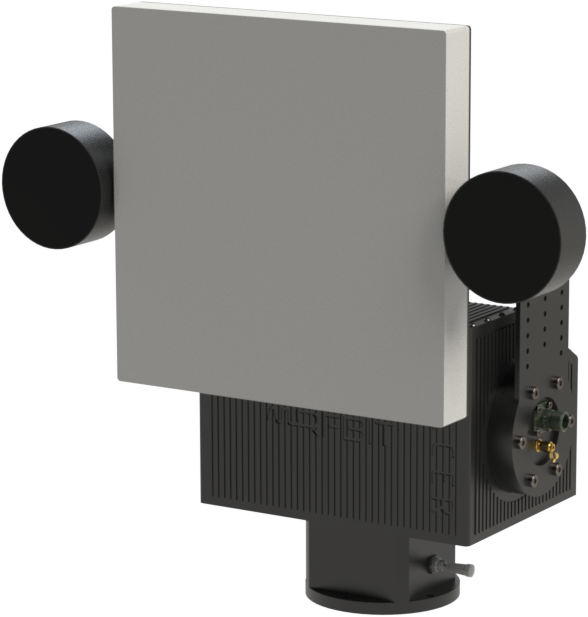
TRACER is a RF monopulse autotracking system engineered for UAV, drone, missile, and rocket telemetry ground stations. TRACER measures the target's angular position directly from the received RF signal using monopulse sum-difference processing. When GNSS is available, TRACER fuses both RF and GNSS data for maximum accuracy. When satellite navigation is jammed or denied, it falls back to pure RF — maintaining continuous lock while conventional systems lose the target entirely. Power on and TRACER is ready in 60 seconds — no compass calibration, no manual alignment. Track any trajectory including full overhead passes with zero dead zones. Send centimeter-level positioning corrections to the aircraft in real time. Mount any antenna up to 25 kg. Deploy in under five minutes with one operator, run 24 hours on a single battery, operate from −30°C to +55°C. Environmentally qualified to MIL-STD-810G for temperature extremes, rain, humidity, sand, dust, vibration, and mechanical shock.
RF Tracking
TRACER uses RF monopulse angle measurement to track airborne platforms with 3° accuracy — entirely through the RF signal itself. No GPS, no INS, no external navigation aid. When adversaries jam satellite navigation, other tracking systems go blind. TRACER does not.
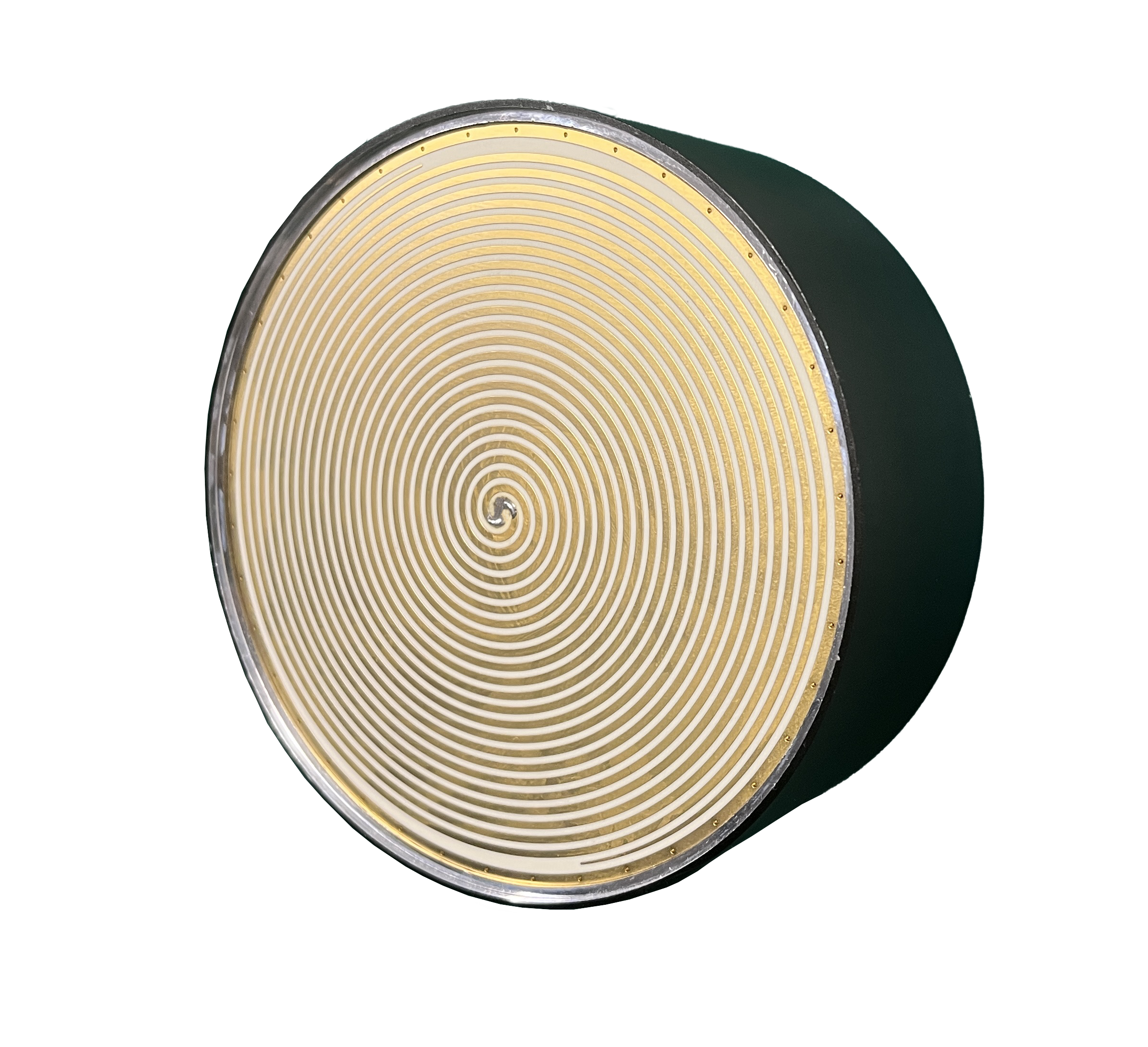
The monopulse comparator processes sum and difference signals from the spiral array simultaneously, resolving the target's angular offset in a single pulse. Nothing is steered electronically — the beam is fixed to the aperture, and servo motors slew the entire pedestal in azimuth and elevation until that offset falls to zero. It is the same technique military radars have relied on for decades: proven, instantaneous, and immune to GPS denial.
Antenna Design
Every TRACER ships with a proprietary wideband spiral antenna array, designed and manufactured in-house. The spiral geometry provides inherent circular polarization across the full operational band — eliminating polarization mismatch losses that degrade link margin in conventional systems.
A single aperture covers the entire telemetry frequency range. No antenna swaps, no band-specific hardware. This is not a modified commercial antenna — it is a purpose-built element optimized for monopulse tracking from day one.
Navigation & Positioning
Most tracking systems require a compass calibration or a manual north alignment before every deployment. TRACER doesn't. Two independent L1/L2/L5 GNSS receivers, each with its own active antenna, compute a differential baseline that determines True North automatically. No compass. No manual alignment. No declination tables. Power on, wait 60 seconds, and TRACER knows exactly where it is and which direction it faces — anywhere on Earth.
TRACER doesn't just track — it navigates. The onboard RTK base station generates real-time kinematic corrections and transmits them to the aircraft over the existing telemetry data link. The UAV receives centimeter-level position accuracy directly from TRACER, without deploying a separate RTK ground station, without a second radio link, without any additional equipment. One system on the ground provides both precision tracking and precision navigation to the aircraft simultaneously.
Field Proven
TRACER is not a prototype. It has been deployed in active operational environments, tracking real targets under real conditions — including GPS-denied scenarios. Thousands of operational hours across multiple programs, consistently delivering reliable tracking performance where it matters most.
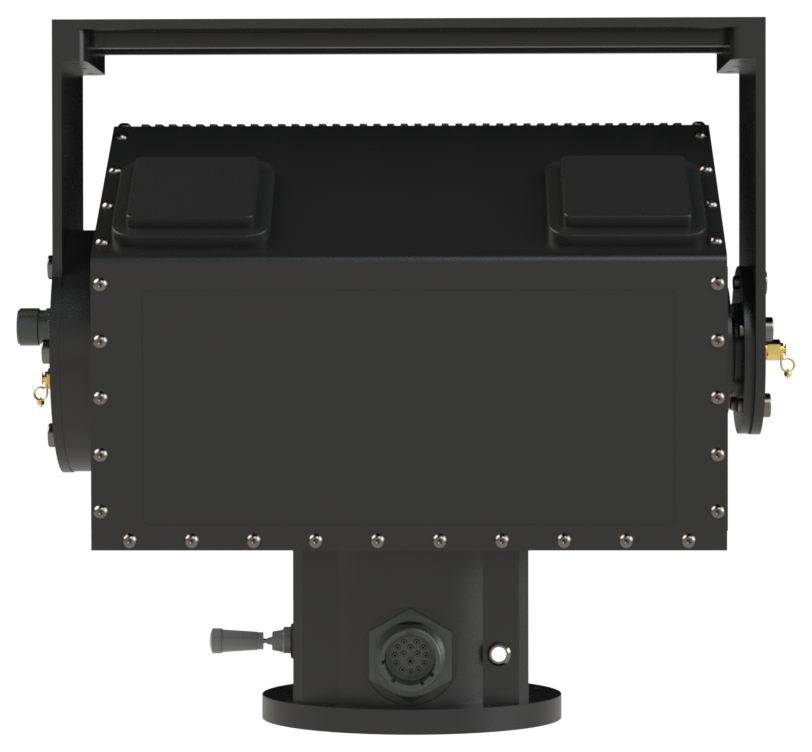
From scorching desert deployments to high-altitude test ranges, TRACER has earned its place in the field. Every design decision — from the steel U-bracket to the sealed MIL-STD-38999 connector — was validated not just in qualification testing, but in the hands of operators who depend on it.
Motion System
20 RPM in azimuth, 5 RPM in elevation — fast enough to acquire and track high-speed targets including UAVs, missiles, and rockets. The integrated slip ring provides truly unlimited continuous rotation — no cable wrap, no mechanical stops, no dead zones. Track a target through any trajectory, including full overhead passes and continuous orbits.
Ultra-low backlash gearing throughout the drive train minimizes the dead band between direction changes to a fraction of a degree. The antenna stays locked on target during rapid maneuvers and direction reversals — exactly when other systems lose track. Low backlash is not a spec-sheet number; it's the difference between maintaining and losing your data link.
Smart Diagnostics
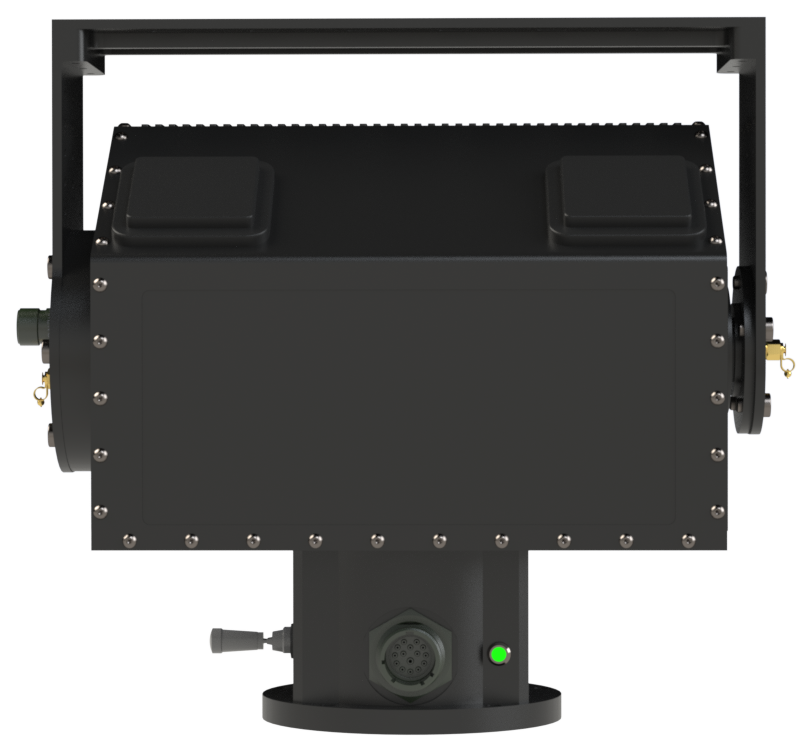
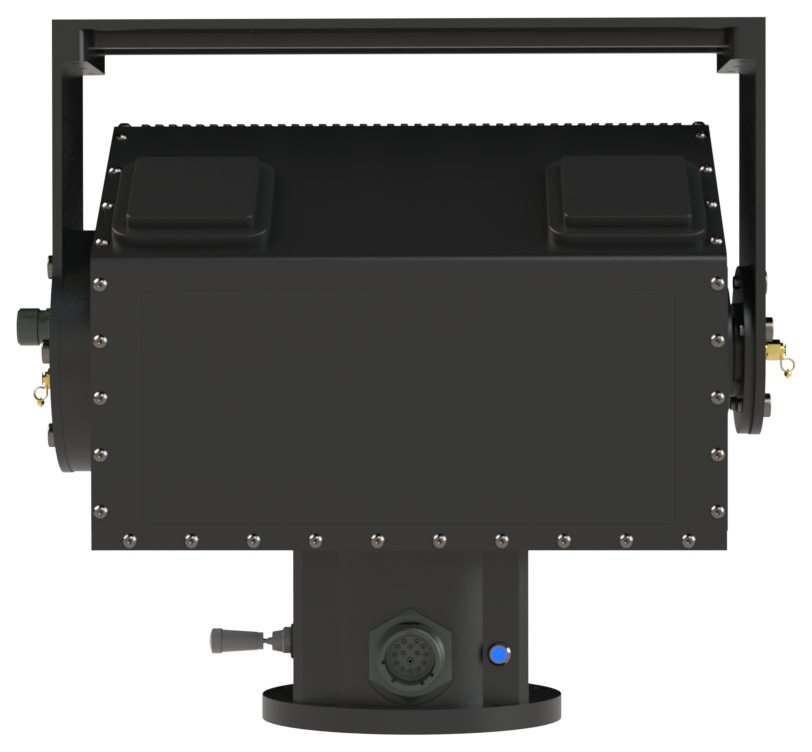
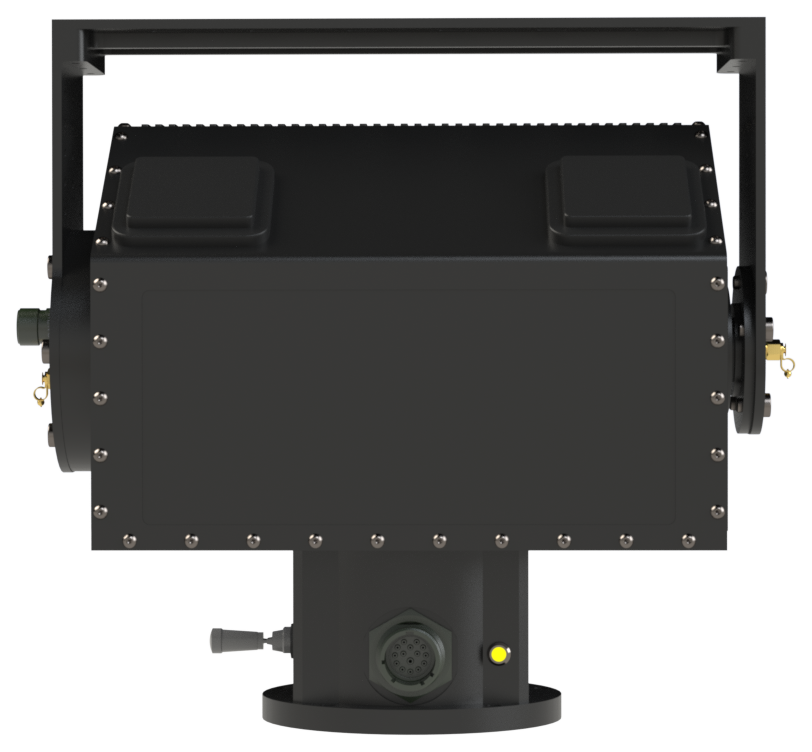
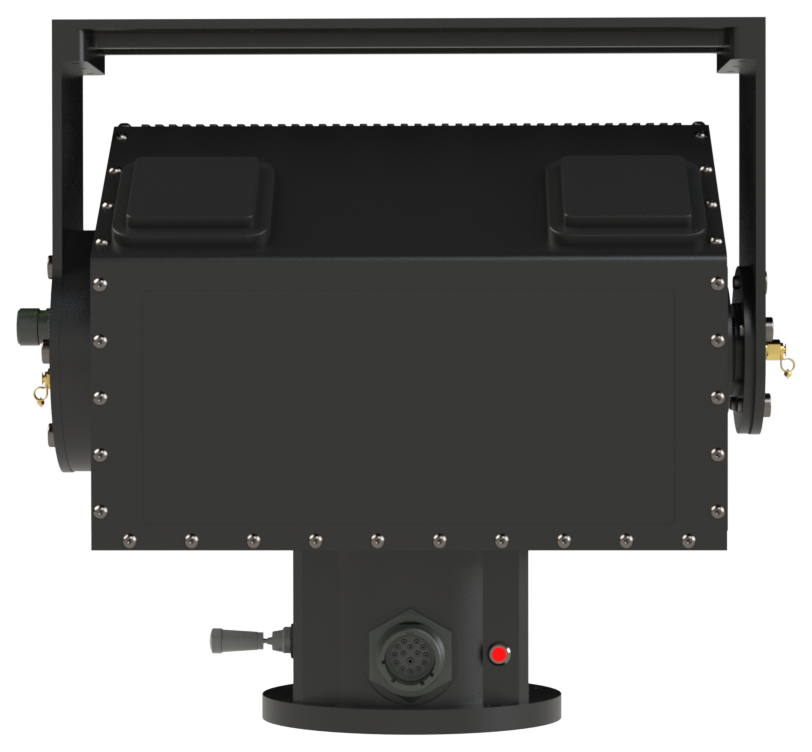
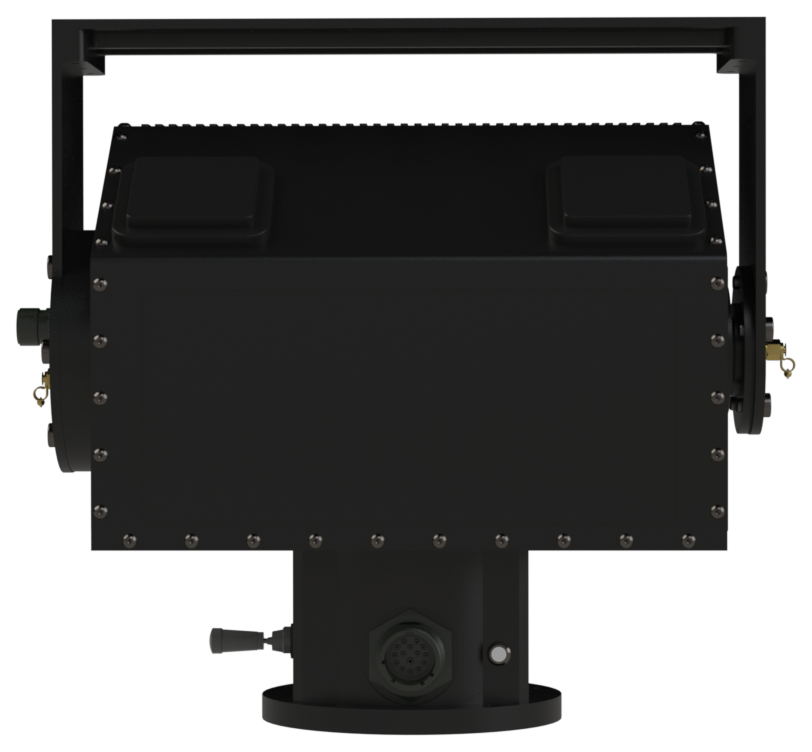
Integrated LED indicators provide instant visual status — tracking mode, GNSS lock, RTK fix, and fault conditions — readable from 20 meters without connecting a laptop.
System is powered on and completing internal self-tests. All subsystems initializing — motors, GNSS receivers, sensors, and communication interfaces.
Onboard Intelligence
TRACER continuously measures pressure, temperature, humidity, acceleration, angular rate, and magnetic heading through six integrated sensors. This data isn't just logged — it's packaged and transmitted to the tracked platform in real time over the data link. Your UAV receives ground-level meteorological and orientation data without carrying additional sensors. For flight test engineers, this means correlated ground truth data in every telemetry frame.
Structural Engineering
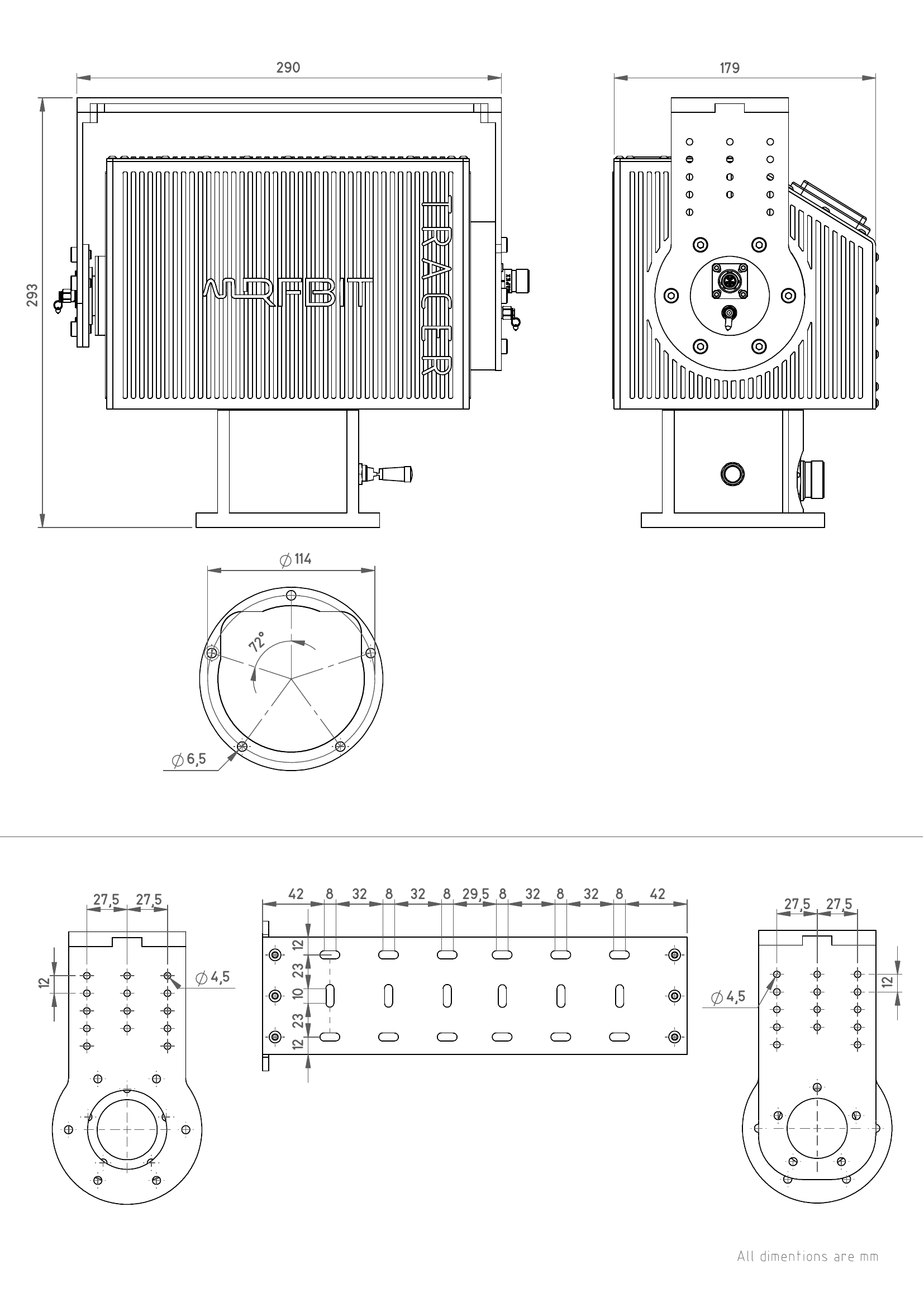
Supports payloads up to 25 kg — large-aperture dish antennas, multi-element arrays, and combined antenna-plus-equipment stacks. But raw capacity is only half the equation. Every heavy payload shifts the center of gravity, and an unbalanced pan-tilt fights its own motors, burns through power, and loses tracking precision. TRACER solves this with an adjustable center-of-gravity system that lets the operator position the payload mass directly over the rotation axes. The result: smooth, efficient motion regardless of what you mount on top.
The payload is secured to a high-strength steel anti-torsion U-bracket, CNC-machined for precise mounting interfaces and maximum rigidity. The U-bracket geometry resists torsional loads during rapid acceleration and deceleration — forces that would flex or fatigue a standard mounting plate. Combined with the counterweight adjustment kit, TRACER handles asymmetric and heavy payloads with confidence.
Finish Options
Military-grade powder coat engineered to withstand salt spray, sand abrasion, UV exposure, and temperature extremes from -40 to +85 °C. Three finishes — each tested to MIL-STD-810G environmental standards. Pick the one that matches your theater of operations.
Desert Sand
Deploy Anywhere
The complete TRACER system — pan-tilt, tripod, and battery — weighs under 15 kg and fits in a single transit case. The 10 kg pan-tilt mounts on a 3 kg carbon fiber tripod that extends to 2 meters, providing stable elevation above ground clutter. Two soldiers can carry and deploy the entire system in under five minutes. No vehicles, no generators, no infrastructure.
The 6S 23,000 mAh lithium battery delivers 24 hours of continuous tracking operation on a single charge. For extended missions, hot-swap a spare battery without powering down. TRACER is designed for the forward edge — where power outlets don't exist and resupply is uncertain.
Connectivity
A single MIL-STD-38999 circular connector carries every signal and power line between TRACER and the operator's equipment. No adapter cables, no breakout boxes — one ruggedized, field-proven connector for power, serial command, telemetry data, Ethernet, and RF pass-through. Fewer connectors mean fewer failure points, faster setup, and cleaner cable routing.
Serial Command
Serial Telemetry
100 Mbps Data
Environmental Qualification
Designed, tested, and qualified to MIL-STD-810G across the full range of environmental stresses. This is not a commercial product in a ruggedized enclosure — every component, seal, and connector is specified for military-grade endurance from the outset.
Technical Data
TRACER — RF Monopulse Autotracking Antenna Pan-Tilt
Tell us about your aircraft and your link. Our engineers will come back with a configuration and a quote.