Virtual Antenna Pattern
FIX shows in real time where each jammer is coming from and where the antenna has placed its nulls, and the user can read this data out of the unit whenever it is needed.
From $999 USD
ITAR-free·Evaluation kit $2,199·Ships in 8–12 weeks
A family of GNSS anti-jam modules: seven models, four to sixteen channels, single or dual band, Compact or Performance. Each puts the antenna array, null-steering engine and GNSS receiver in one unit, with clean RF out for the receiver you already fly and a browser GUI that shows you the jammer.
The Price
Anti-jam used to cost more than the aircraft it protected, so most aircraft flew without it.
What It Is
FIX takes the place of the GNSS antenna. It is a controlled reception pattern antenna (CRPA): it keeps receiving the satellites and cancels the directions jamming comes from, before the signal reaches the receiver.
Inside
Under the radome sit four, eight or sixteen antenna elements, each with its own RF channel, and below them the processor that combines them into one antenna.
Adaptive Nulling
FIX works out where the interference comes from and combines the elements so that direction goes deaf, while the satellites stay in view. Up to fifteen jammers at once, followed as they move.
Form Factor
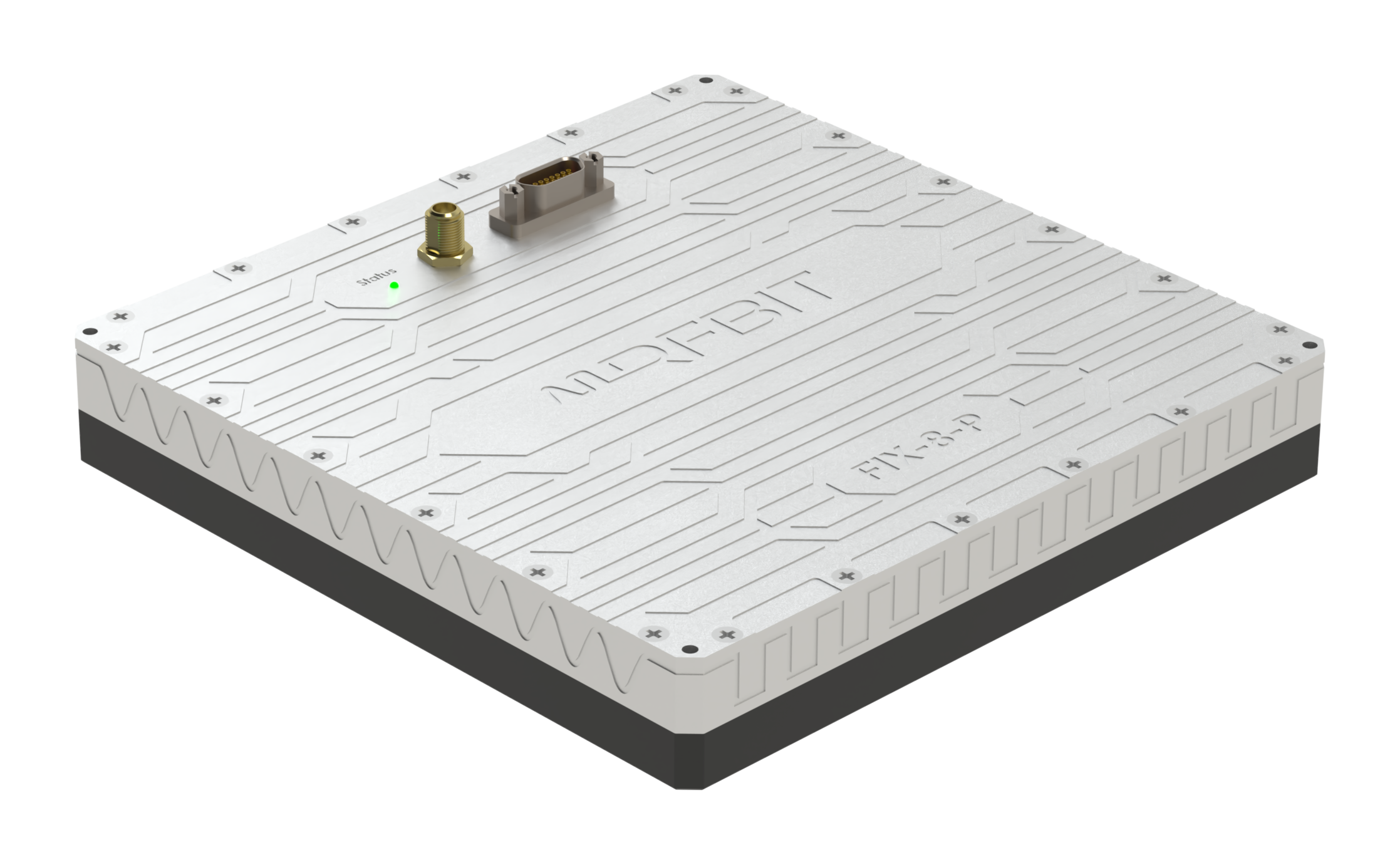
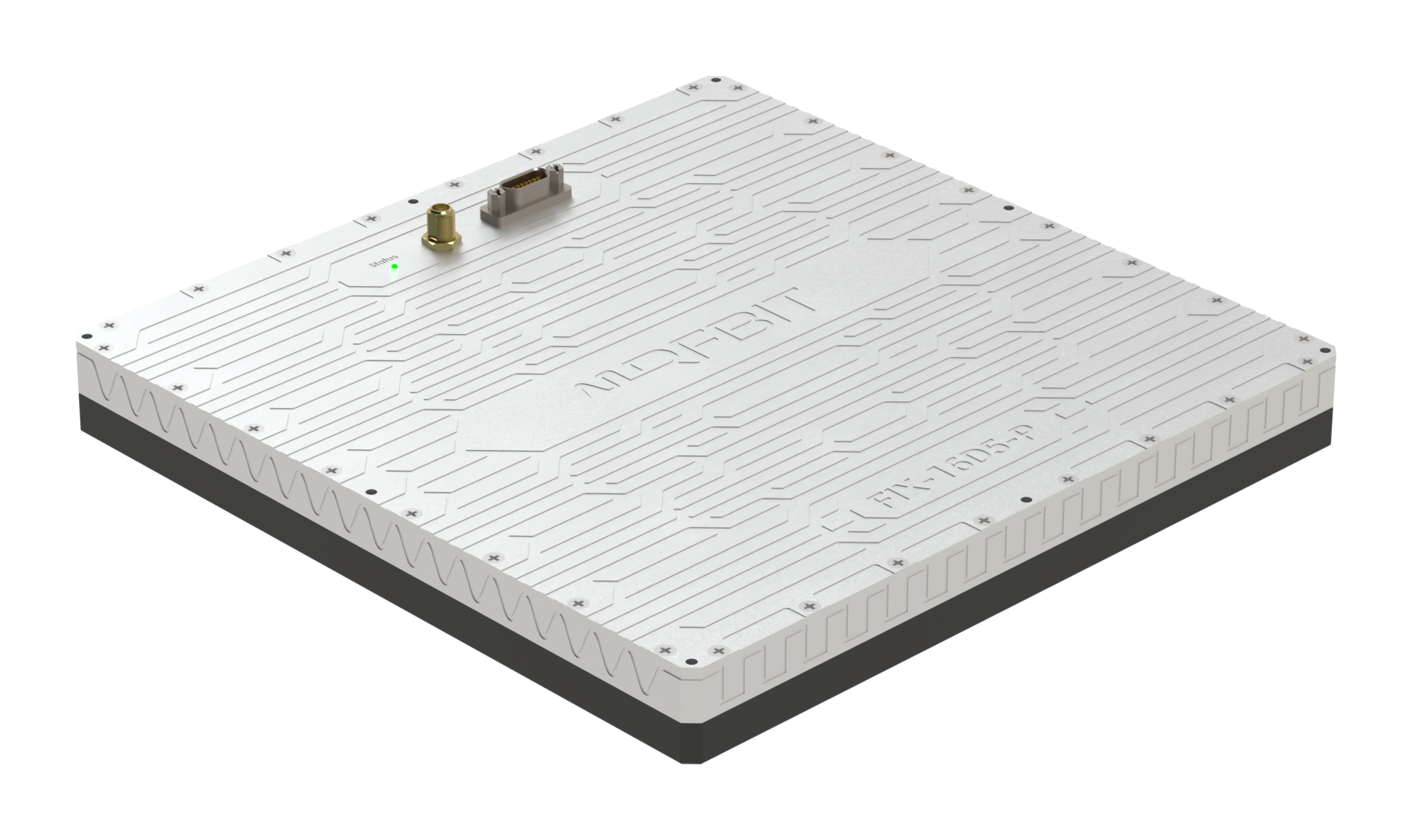
Array, RF chain and processor in one 23 mm unit under a flat radome, so it goes where the GNSS antenna was without changing the airframe. Sealed to IP66 and qualified to MIL-STD-810G.
The Price
CRPA protection priced for every aircraft in the fleet, not only the few that could justify it.
The Question
This is what a CRPA costs to build. There is no exotic part in a FIX — the silicon is the same class you will find in any anti-jam module built this decade. The difference is volume: anti-jam antennas were designed for programmes that buy a handful at a time, and priced to match. FIX was designed from the first drawing to be built by the thousand, for drone fleets rather than flagships, so the price falls as the order grows.
The Family
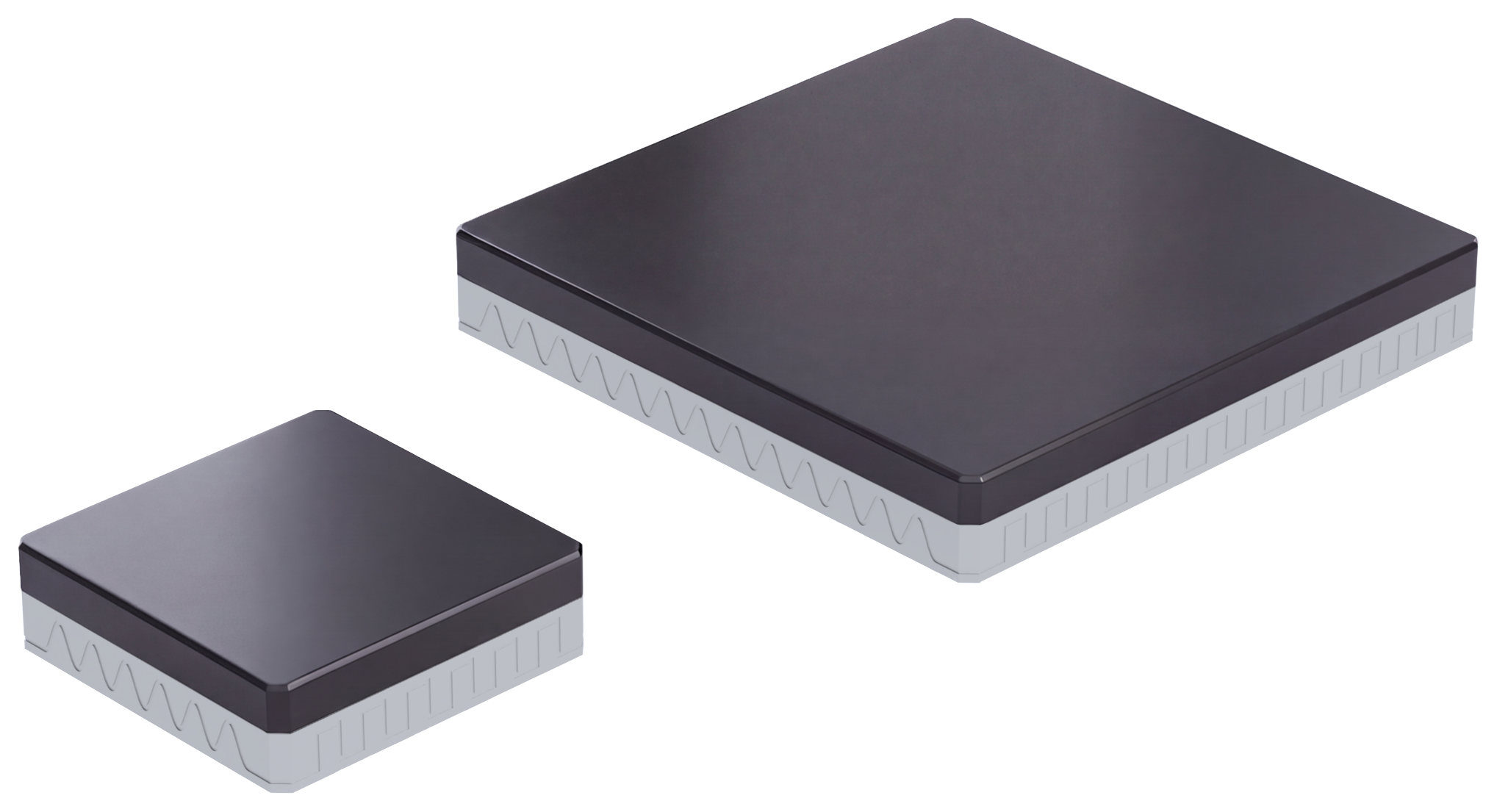
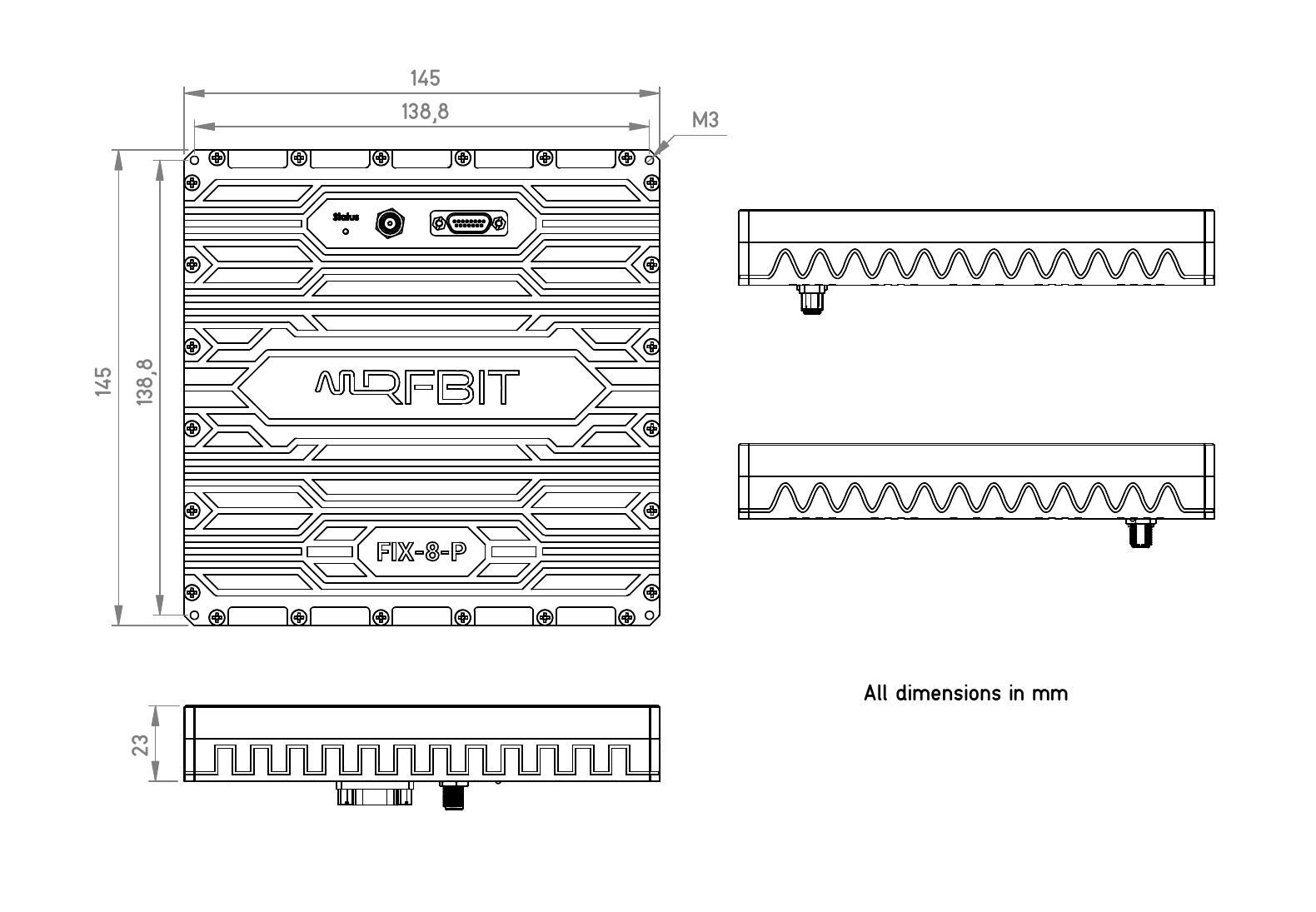
Every FIX is the same 23 mm unit, with the same connectors, pinout and mounting. What changes is the array under the radome: four, eight or sixteen elements. Moving to a larger array is a change of part number, not a new integration.
Nulls
Each element gives the processor one more way to steer a null. An array of N elements cancels up to N − 1 jammers at once: four elements suppress three, eight suppress seven, sixteen suppress fifteen jammers.
Two Builds
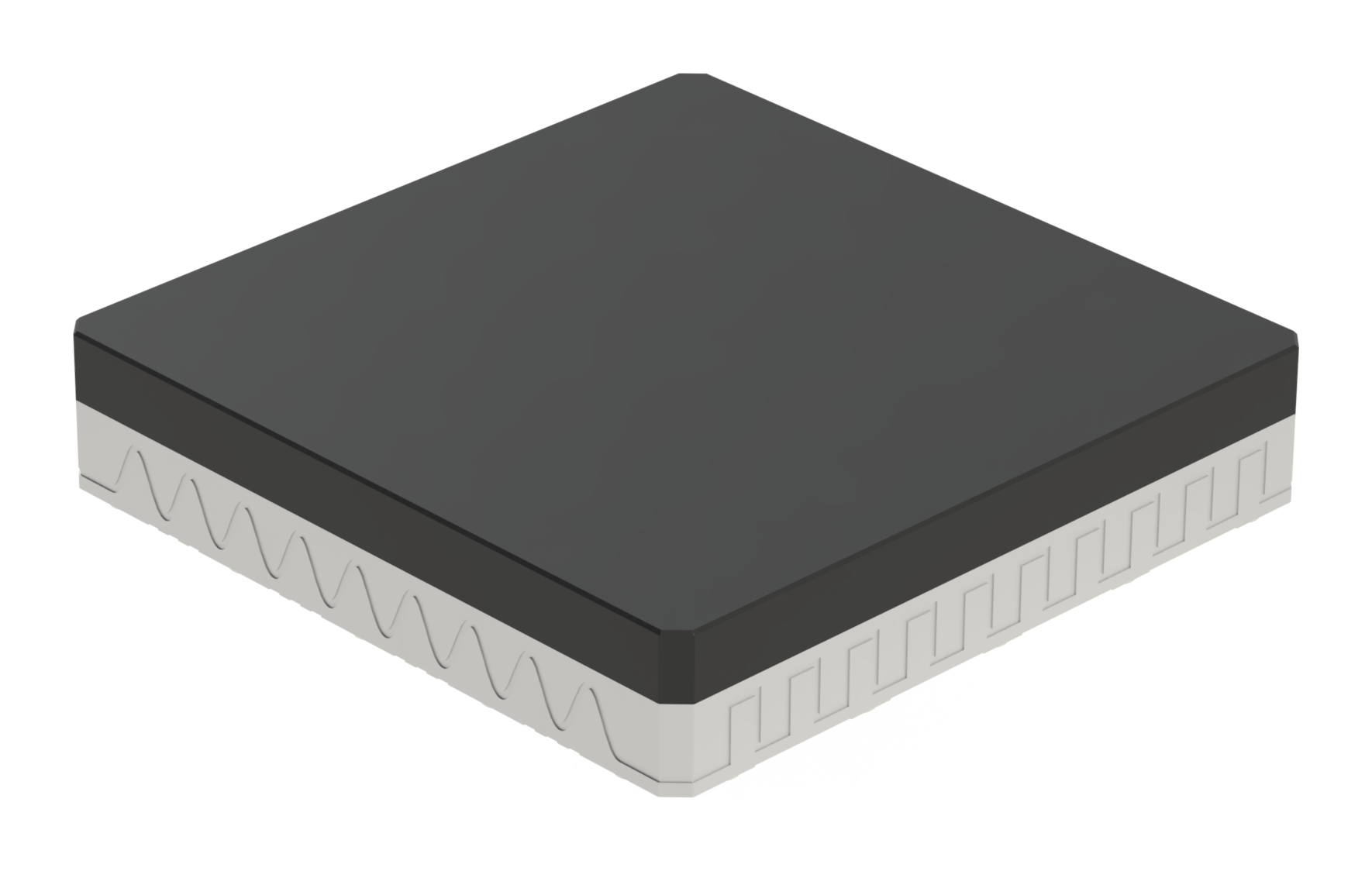
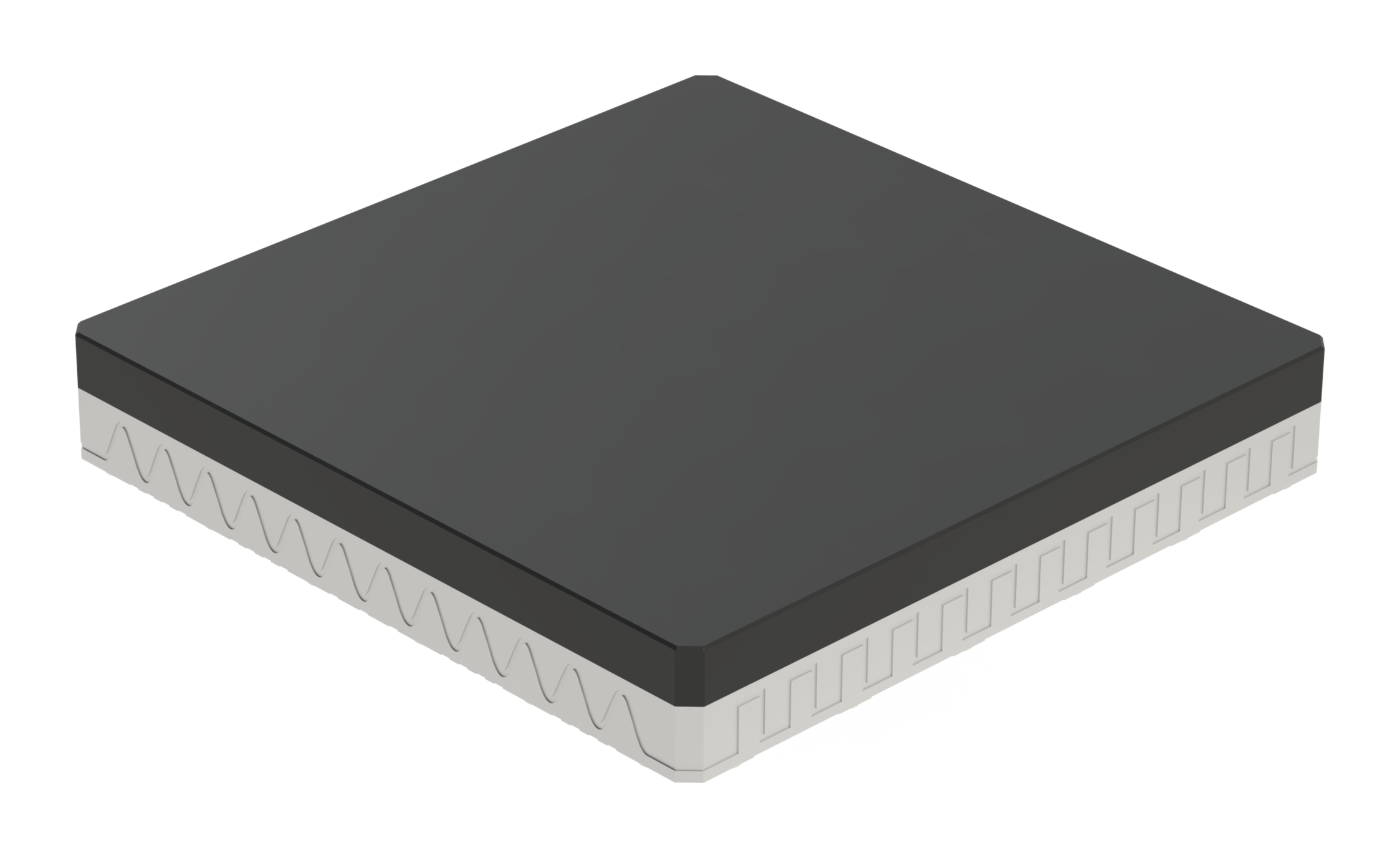
Every FIX model comes in two builds, at the same price. Compact is smaller and lighter, for airframes with little room to spare. Performance spaces its antenna elements further apart, which gives it better jammer suppression.
>40 dB jammer suppression
>50 dB jammer suppression
Band Diversity
Most jammers target L1; far fewer cover L2, and fewer still L5. FIX 8D2 and 8D5 keep the same eight elements as FIX 8, in almost the same size, but split them between L1 and L2 or L5. When L1 is jammed, the fix keeps coming from the band the jammer missed.
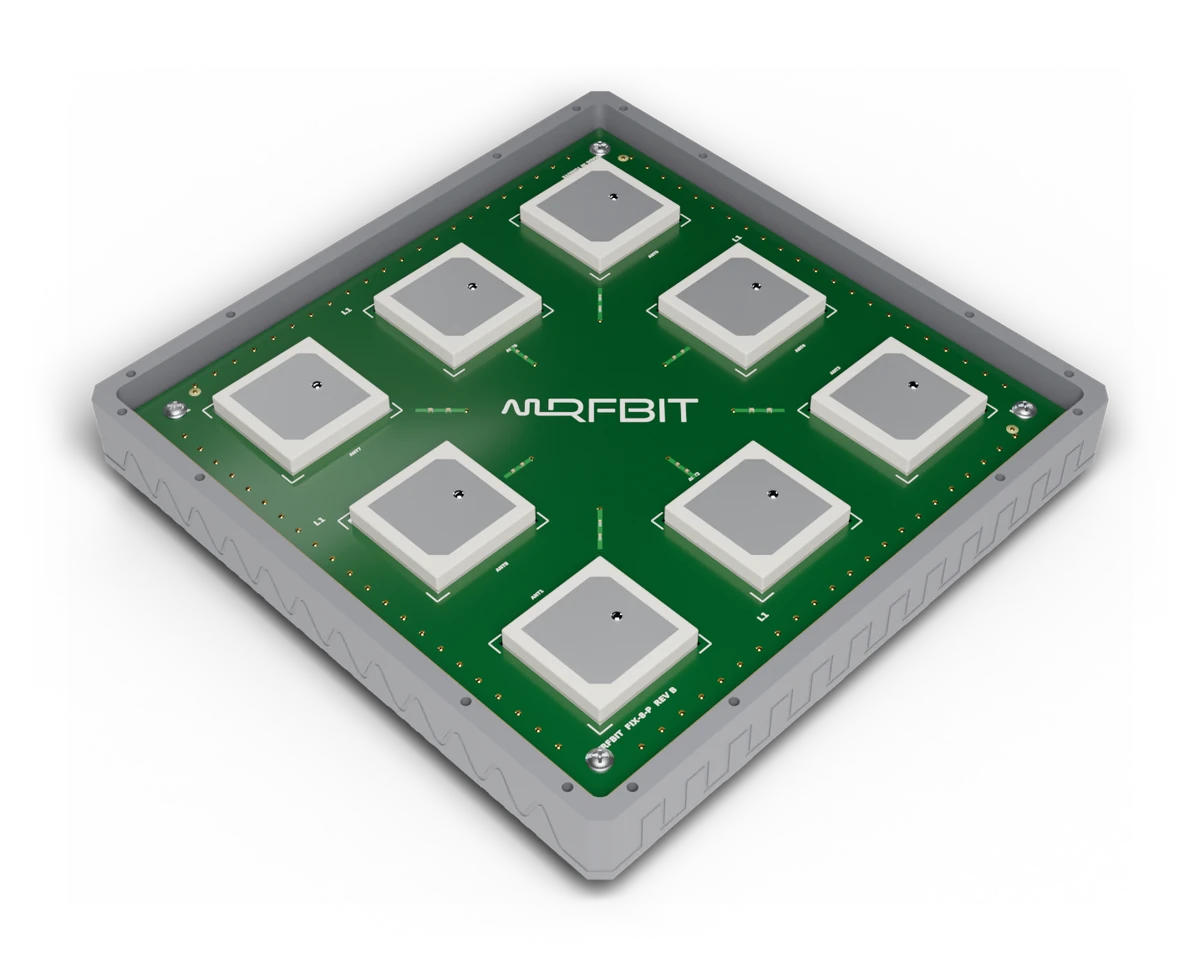
Suppress 7 L1 jammers
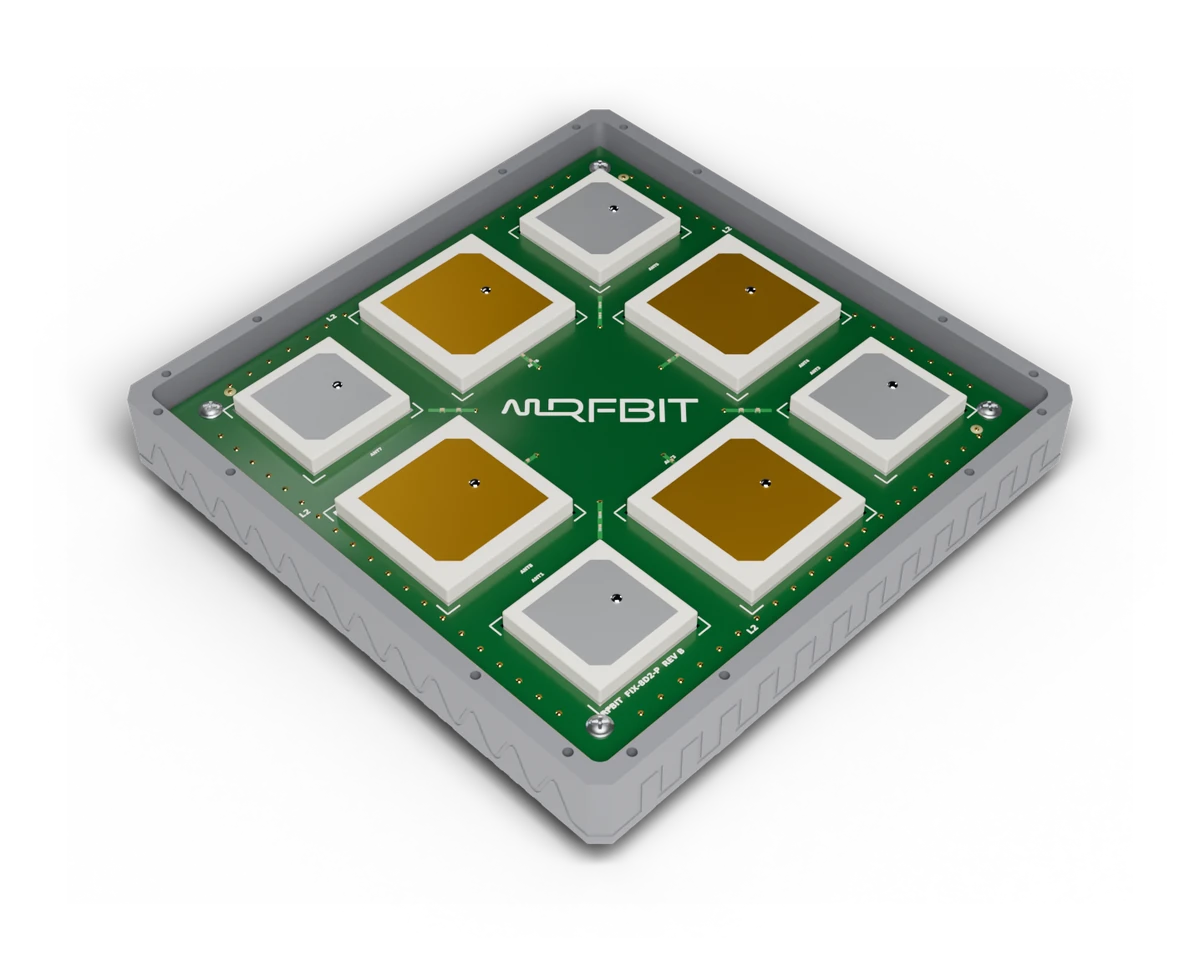
Suppress 3 L1 + 3 L2 jammers
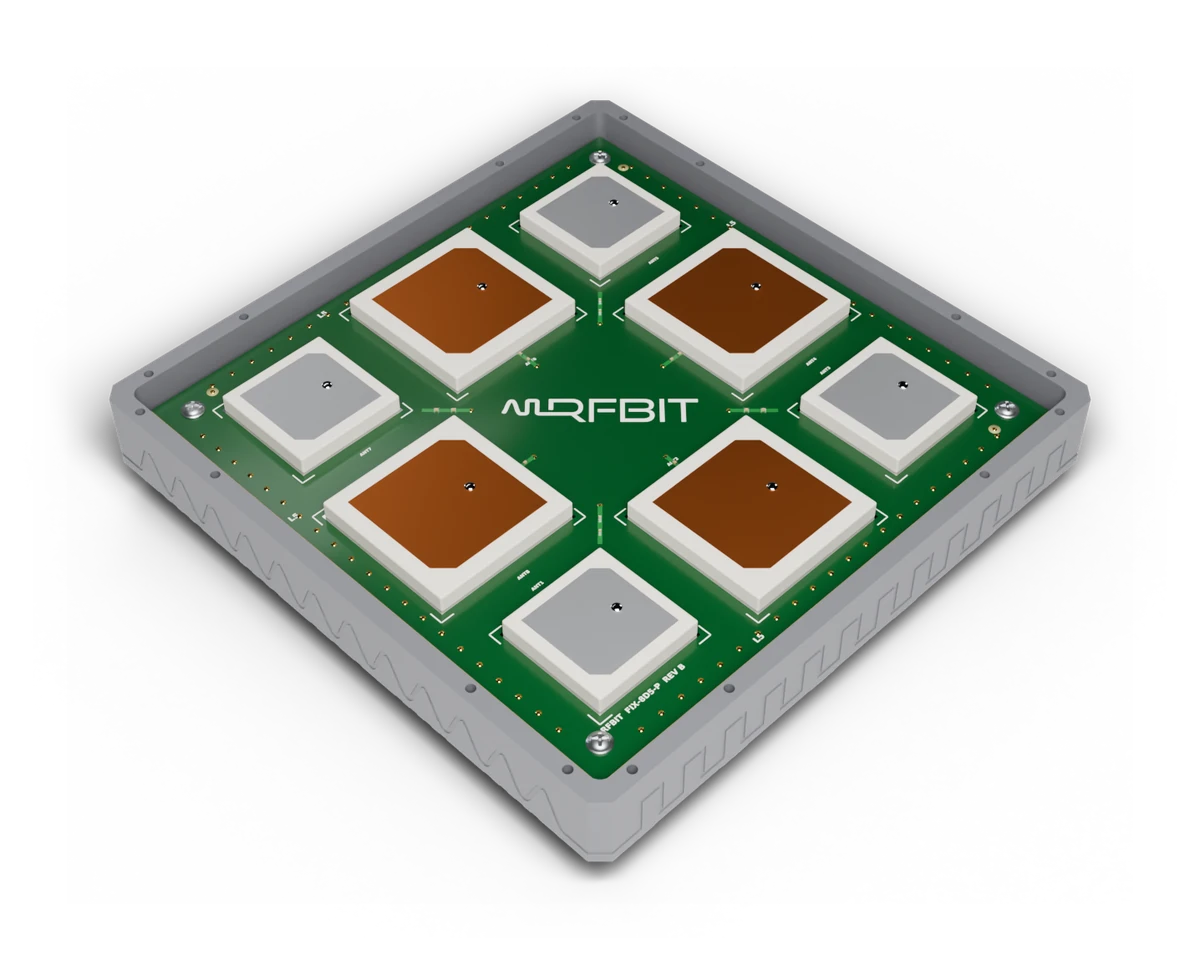
Suppress 3 L1 + 3 L5 jammers
Software Capabilities
Every FIX serves a browser GUI on its Ethernet port. Nothing to install: open the IP address, and the product shows you what it sees, and what it is doing about it.
FIX shows in real time where each jammer is coming from and where the antenna has placed its nulls, and the user can read this data out of the unit whenever it is needed.
The spectrum is shown live, with a waterfall below it. Every jammer found in it is listed with its type, centre frequency, bandwidth, level, direction and the response FIX has chosen for it. Both the spectrum and the jammer list can be sent to the user as data.
FIX watches the spectrum, and when a jammer appears it places a notch filter over the frequencies the jammer occupies, adjusting the depth as the jammer changes. When the jammer is gone, the filter is lifted. The screen shows the spectrum before and after the filter, with the notch depth and frequency range. The filter data can be sent to the user as well.
FIX runs spoofing detection algorithms developed specifically for it. With them, the fake satellites are picked out as soon as an attack starts: they turn red on the sky plot, the direction they come from is marked, and FIX leaves them out of the position solution and keeps working with the real satellites. Each detection can also be sent to the user.
Every FIX carries its own u-blox GNSS receiver: the MAX-M10 in single-band models, the ZED-F9P with RTK in dual-band models. Each satellite it tracks is shown on the sky plot and the world map with its signal strength, grouped by constellation, and this satellite data can also be sent to the user.
FIX carries a 3-axis accelerometer, a 3-axis gyroscope and a 3-axis magnetometer (together a 9-axis IMU), a barometer, a humidity sensor and a board temperature sensor. Their readings are shown live, so the unit’s condition can be checked from the ground. They are also logged together with every jamming and spoofing event, each time-stamped, so after a flight you can see when a jammer appeared and from which direction.
FIX can be the drone’s GPS and compass module in one unit, doing the job of the separate module that usually sits on the mast. It connects to the autopilot over DroneCAN, or sends position, velocity and time as MAVLink, NMEA or UBX, always with the jamming and spoofing status, so ArduPilot and PX4 can use it directly. The cleaned RF signal is also available on an SMA connector for an external receiver.



 DroneCAN


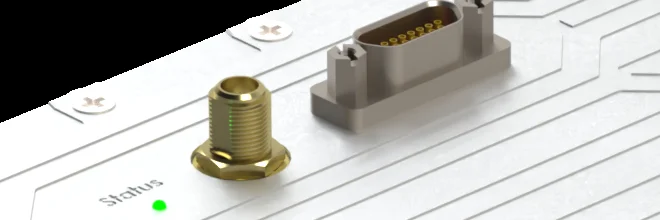
Cleaned RF out over SMA
Smart Diagnostics
An RGB LED on the bottom of the unit shows the user the anti-jam status without a laptop: whether it is starting up, holding a fix, nulling a jammer, or reporting a warning or a fault. It can also be switched off when no light is allowed.
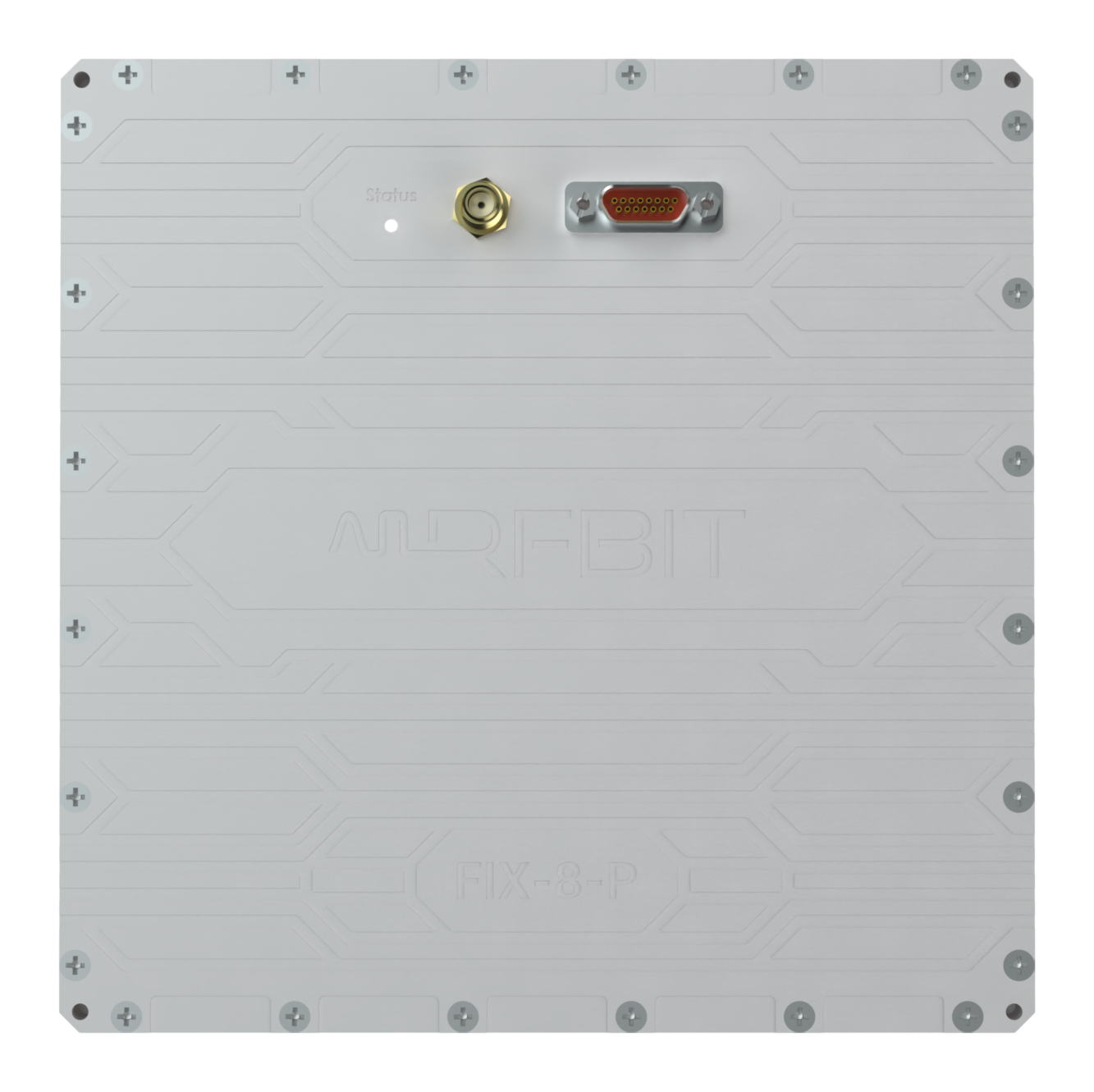
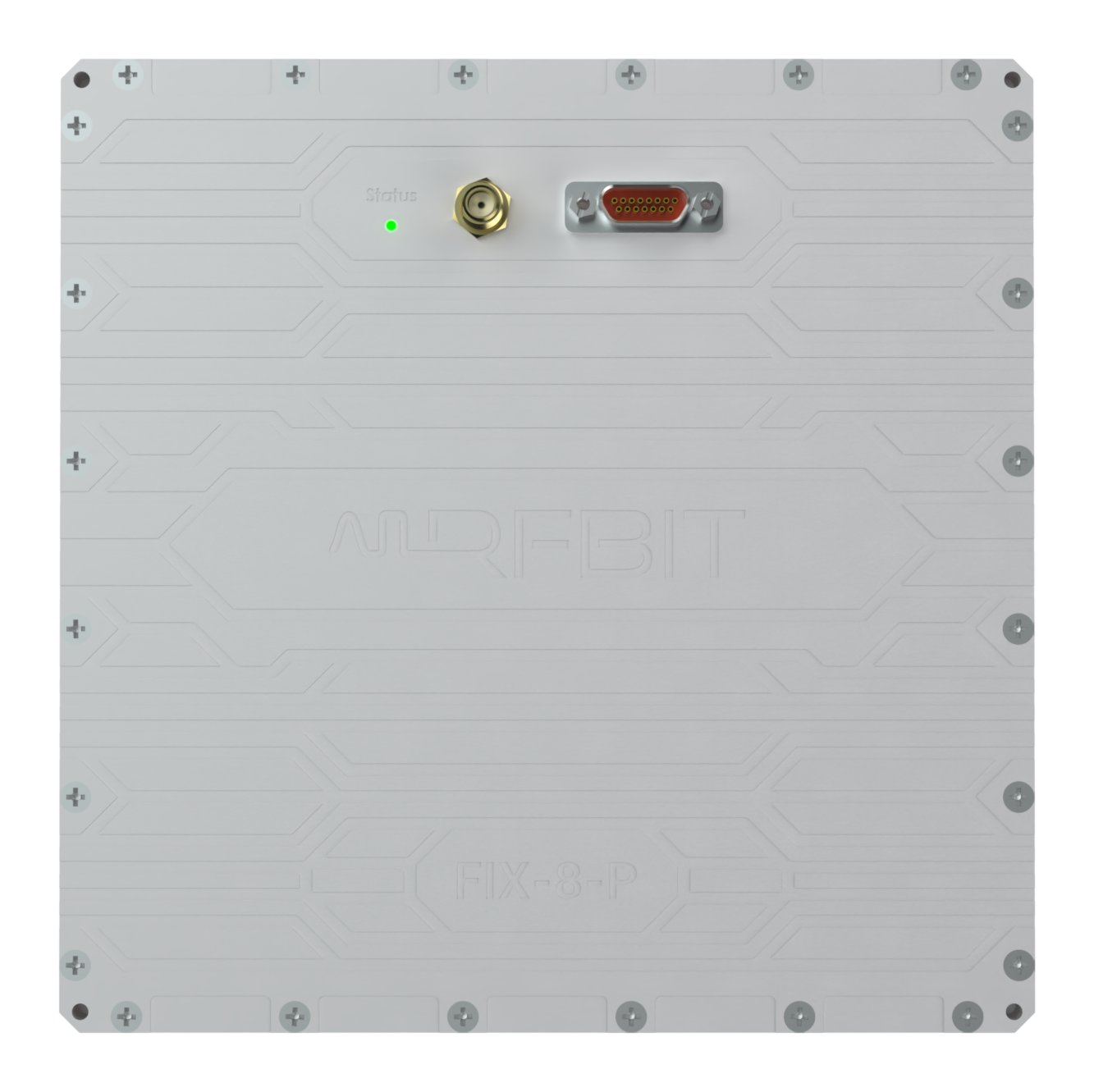
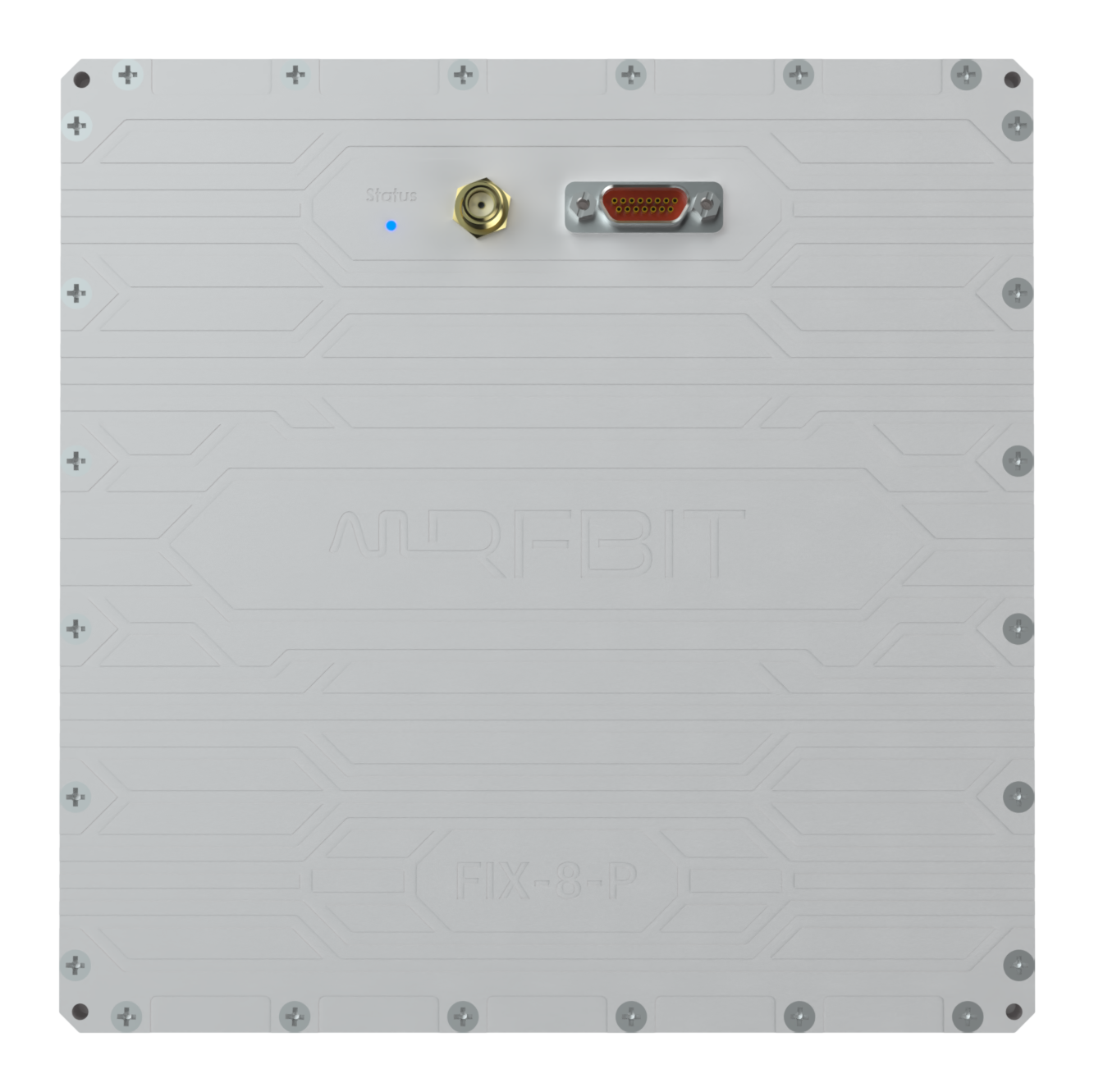
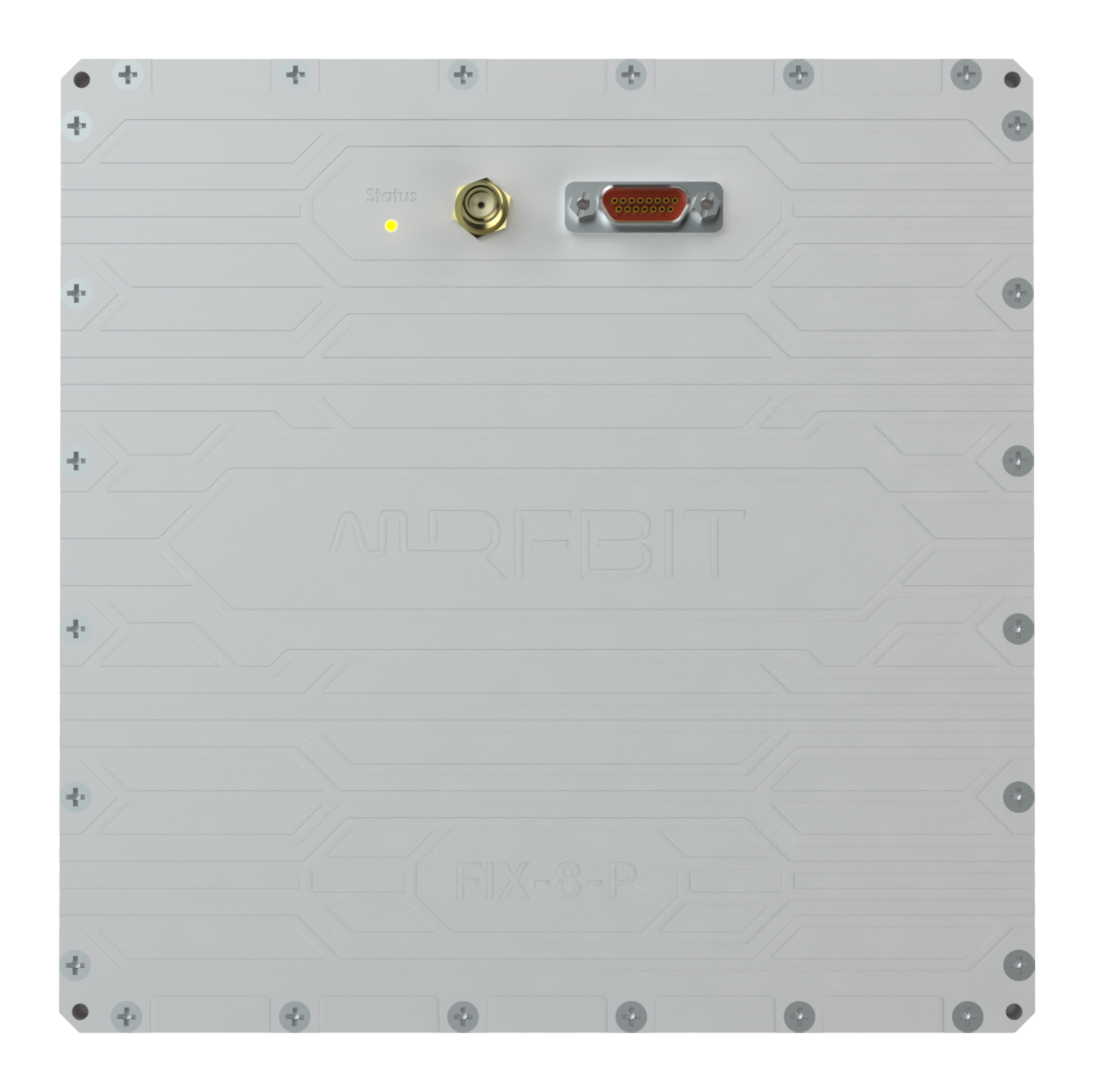
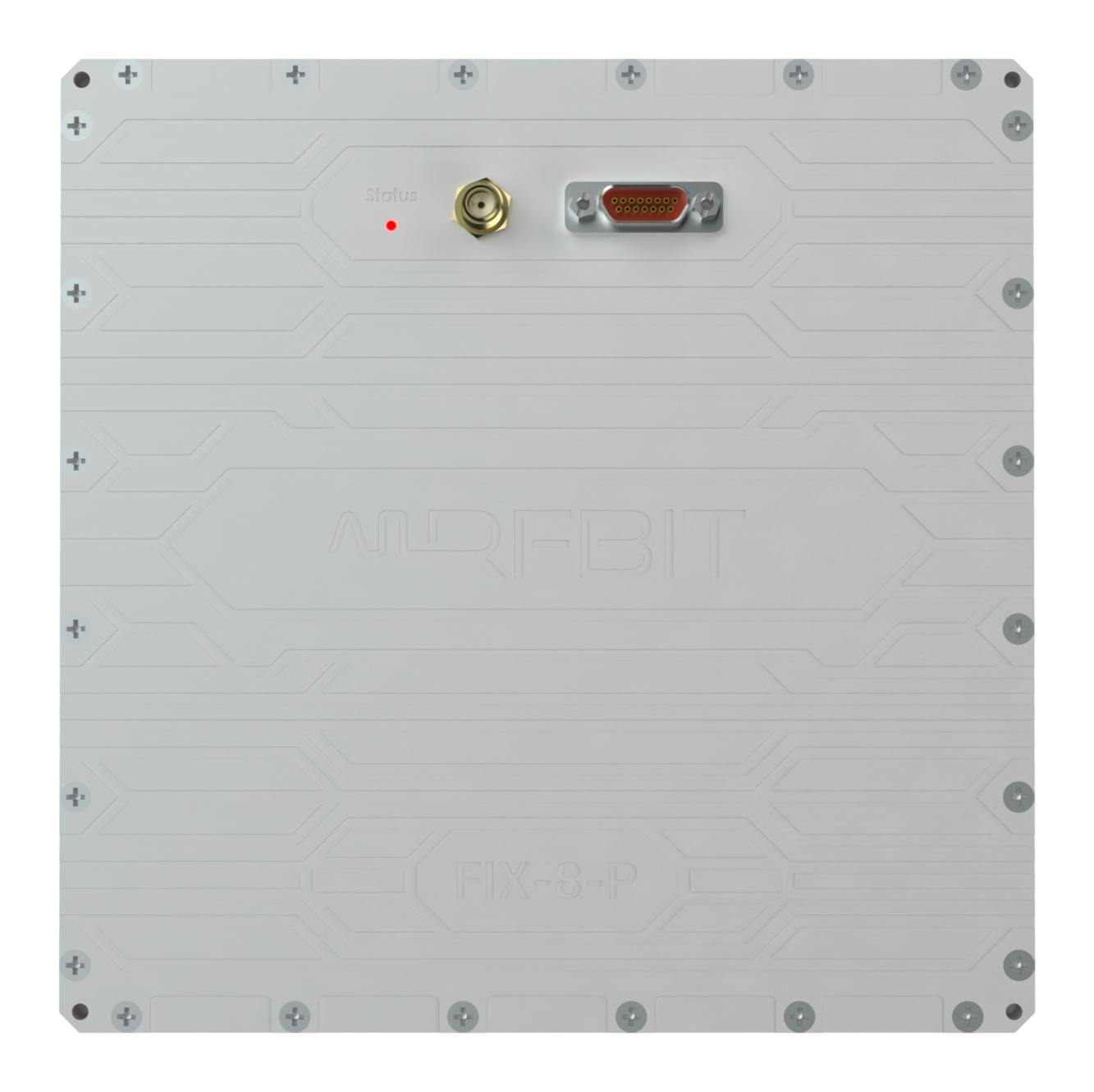
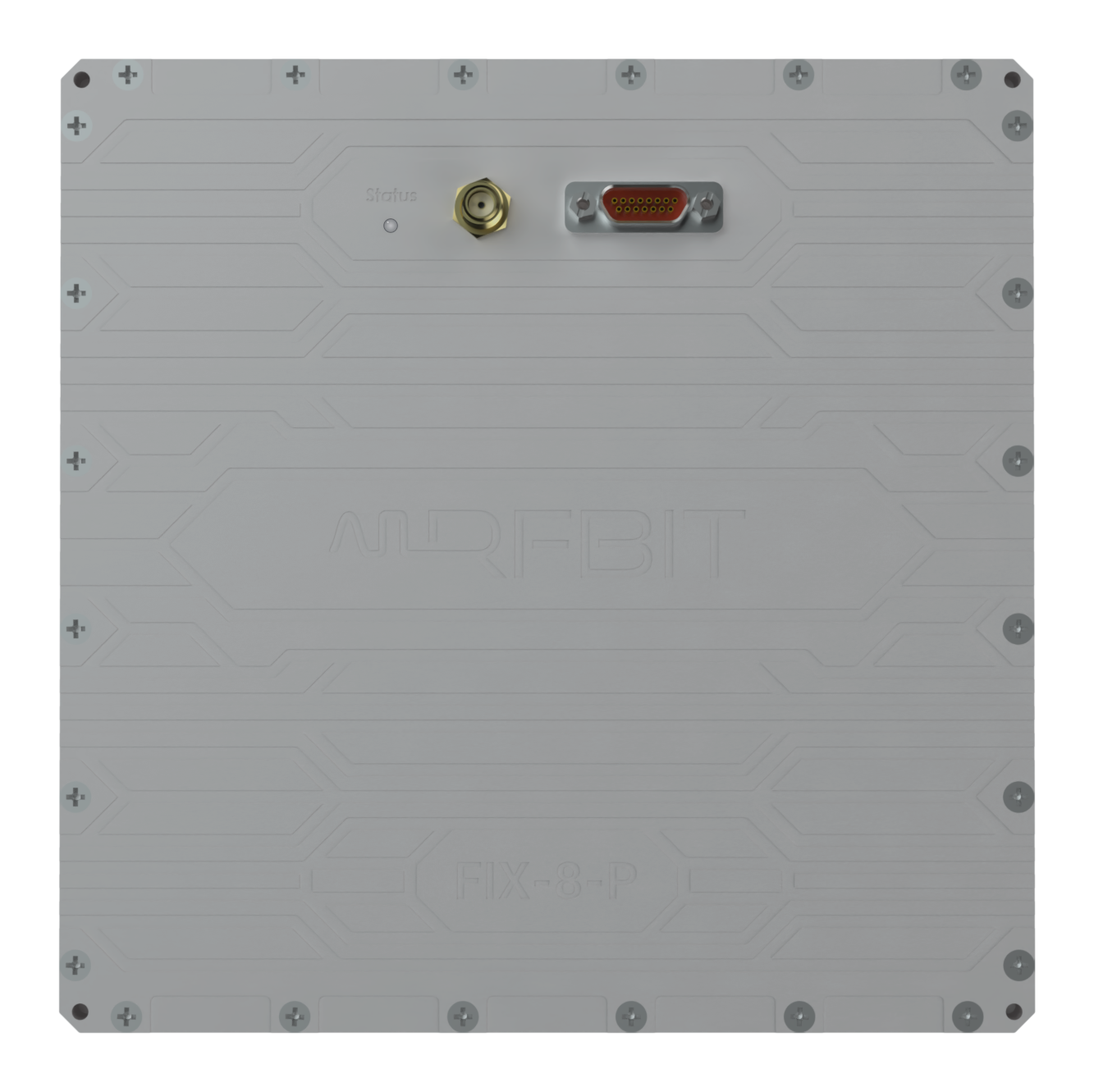
Input power is present and the unit is booting. The LED holds white through power-up until the anti-jam self-test completes.
Interfaces & Connectivity
One 15-pin Micro-D carries power, data and control on every model, and FIX can be controlled over any of its ports. It takes 9 to 36 VDC straight from the platform, and the cleaned GNSS signal leaves on its own SMA.
WebGUI, data streaming and control
Data streaming and control
Data streaming and control
DroneCAN, MAVLink, data streaming and control
Mount FIX where your GNSS antenna was and connect the receiver’s antenna cable to its SMA. The receiver you already use gets the cleaned signal, and apart from powering FIX, nothing in your autopilot setup changes.
Use the receiver inside. Position, velocity and time come out as NMEA, UBX, MAVLink or DroneCAN over the 15-pin Micro-D, with jamming and spoofing status and the bearing of each jammer, for the flight controller to act on.
Environmental Qualification
Every FIX is sealed to IP66, type-qualified to MIL-STD-810G across seven environmental categories, and to MIL-STD-461F for electromagnetic compatibility. Not simulated. Not estimated. Tested and verified against the standard.
Complete Chain
An aircraft flying through jamming needs three things to keep working: its own position, a ground antenna that stays on it, and a data link that gets through. RFBIT makes all three, so they are built to work together and come from a single supplier.
Keeps the aircraft’s position and time when GNSS is jammed or spoofed, so it can still navigate, fly its route and find its way home. It takes the place of the GNSS antenna, so the rest of the aircraft stays as it is.
You are here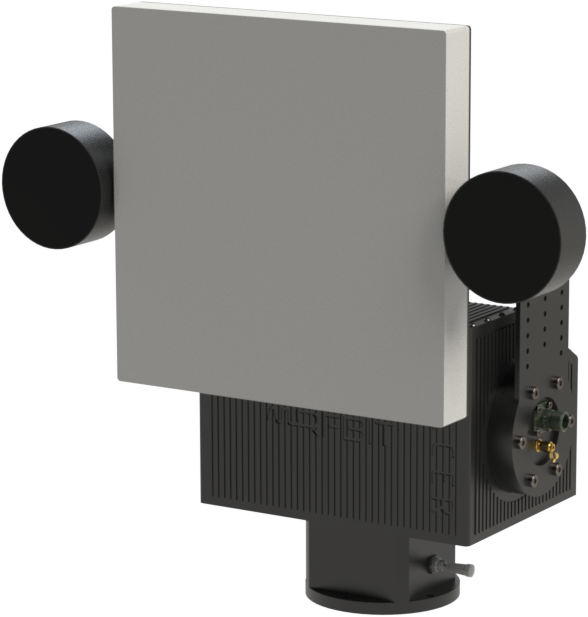
Keeps the ground antenna pointed at the aircraft by following its radio signal, not its reported GPS position, so the link holds even when the aircraft’s GNSS is jammed.
Explore TRACER →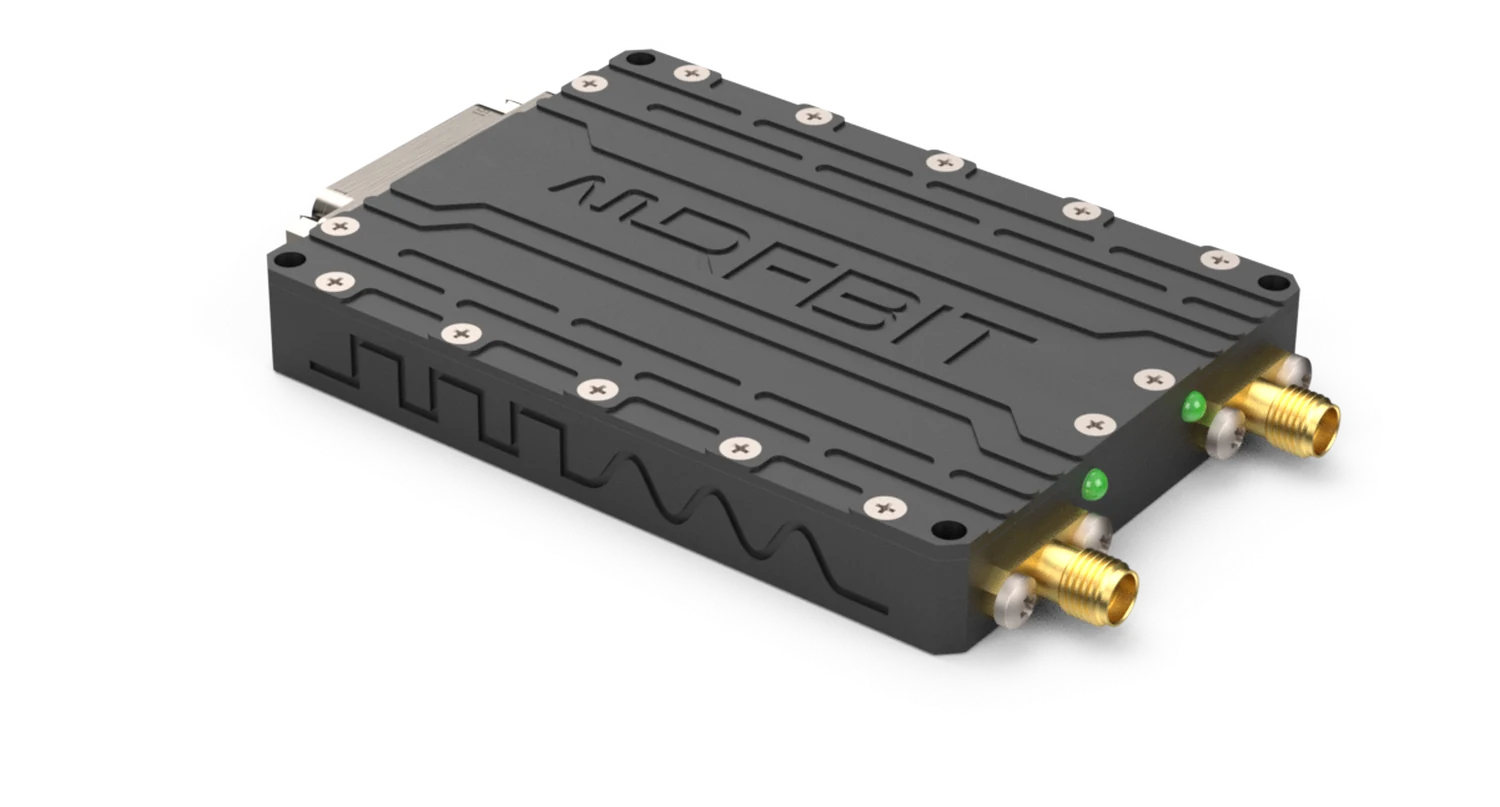
The data link itself, designed to keep the aircraft and the ground station in contact and to carry command, telemetry and video even in jammed environments.
Explore Bridge →Designed and manufactured in Türkiye, and ITAR-free. Nobody in the supply chain can stop your programme for reasons that have nothing to do with it.
All seven FIX models ship 8–12 weeks from order, in either build. Nothing to install on arrival: the WebGUI runs on the unit.
Seven models, each in a Compact and a Performance build.
Compact
Performance
4-Channel Single-Band Anti-Jam Unit · L1 GNSS · Compact Size
The smallest array in the range. Four elements on L1 GNSS and three nulls, for small airframes and munitions where the antenna has to disappear into the skin. The compact size keeps it small and light, for airframes where every millimetre and gram counts.
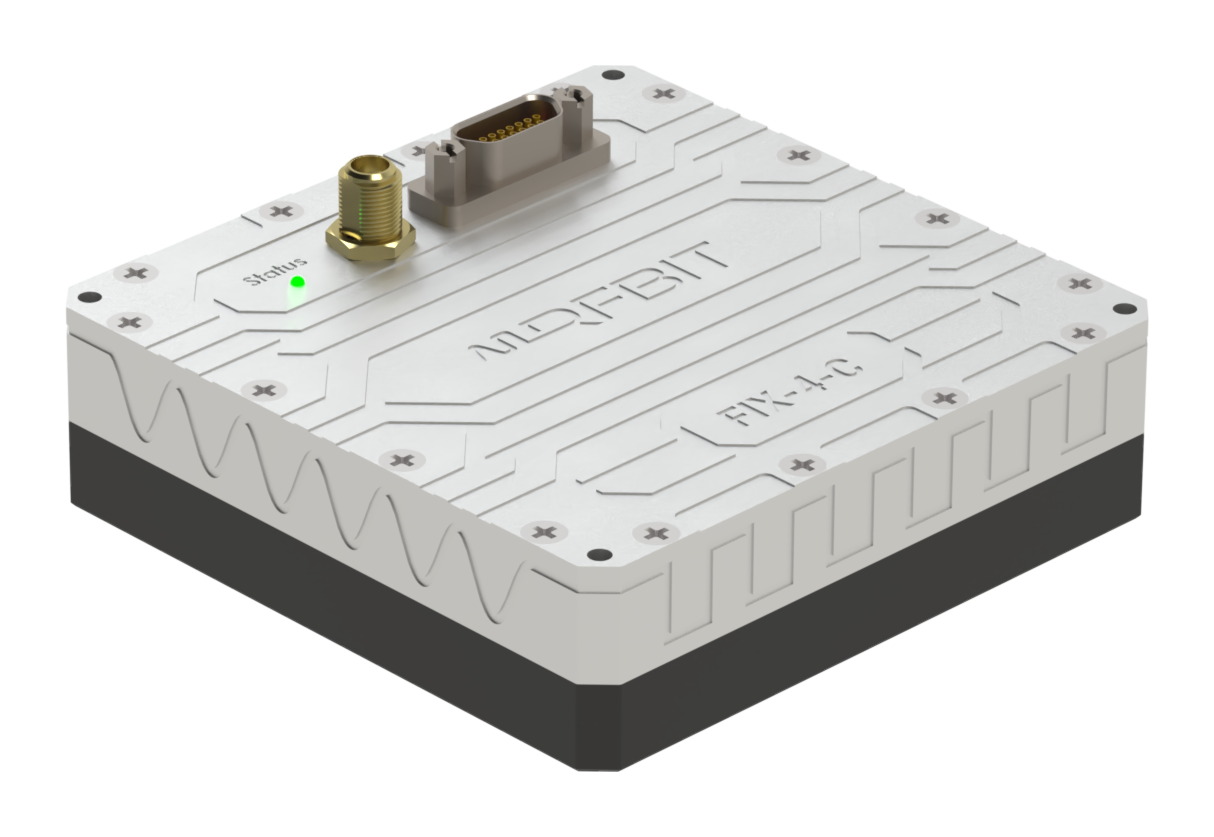
4-Channel Single-Band Anti-Jam Unit · L1 GNSS · Performance Size
The smallest array in the range. Four elements on L1 GNSS and three nulls, for small airframes and munitions where the antenna has to disappear into the skin. The performance size spaces the elements further apart, which gives it better jammer suppression.
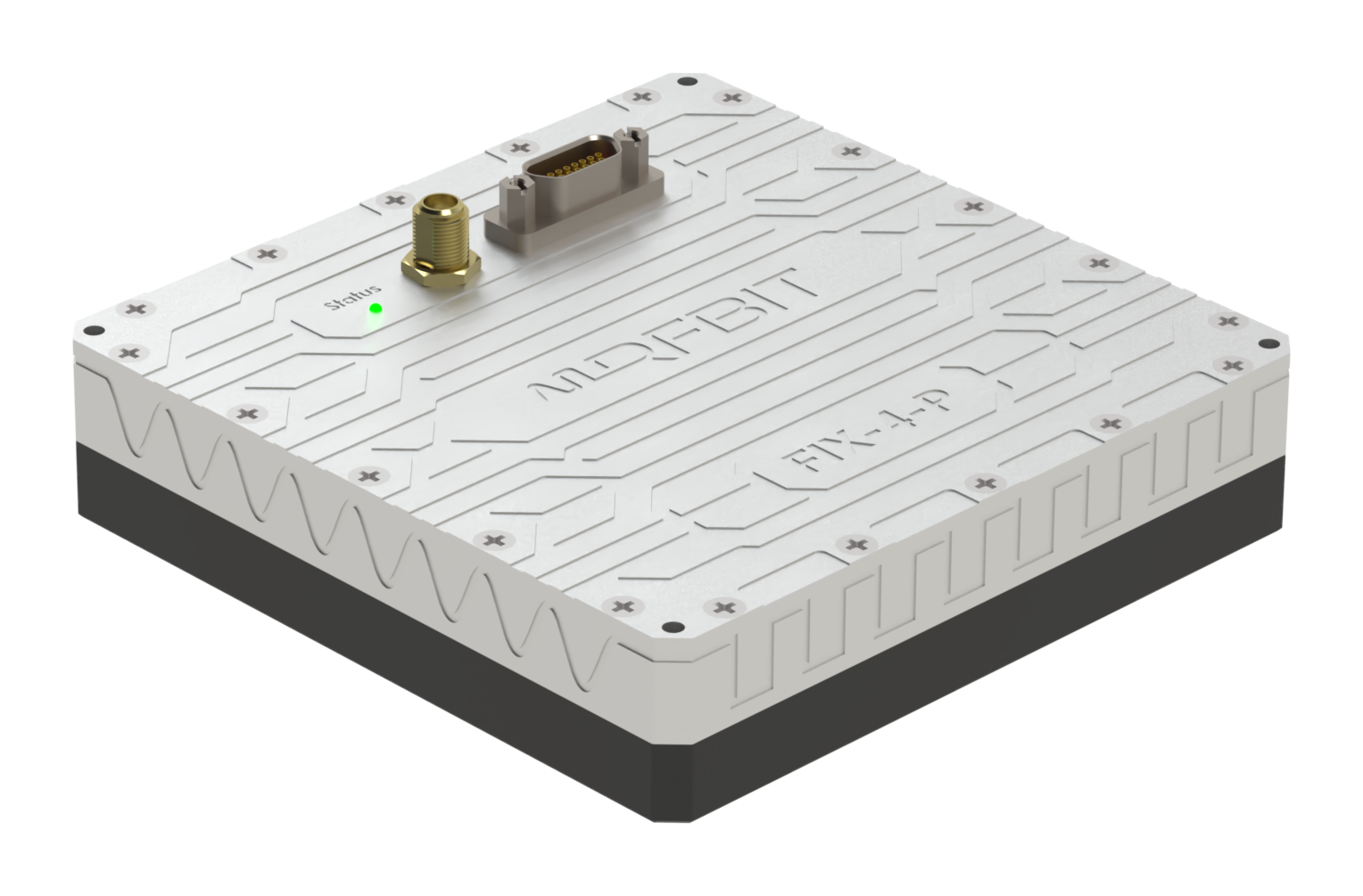
8-Channel Single-Band Anti-Jam Unit · L1 GNSS · Compact Size
The core of the range. Eight elements on L1 GNSS, seven simultaneous nulls, and the price point that puts anti-jam on the whole fleet rather than on the flagship. The compact size keeps it small and light, for airframes where every millimetre and gram counts.
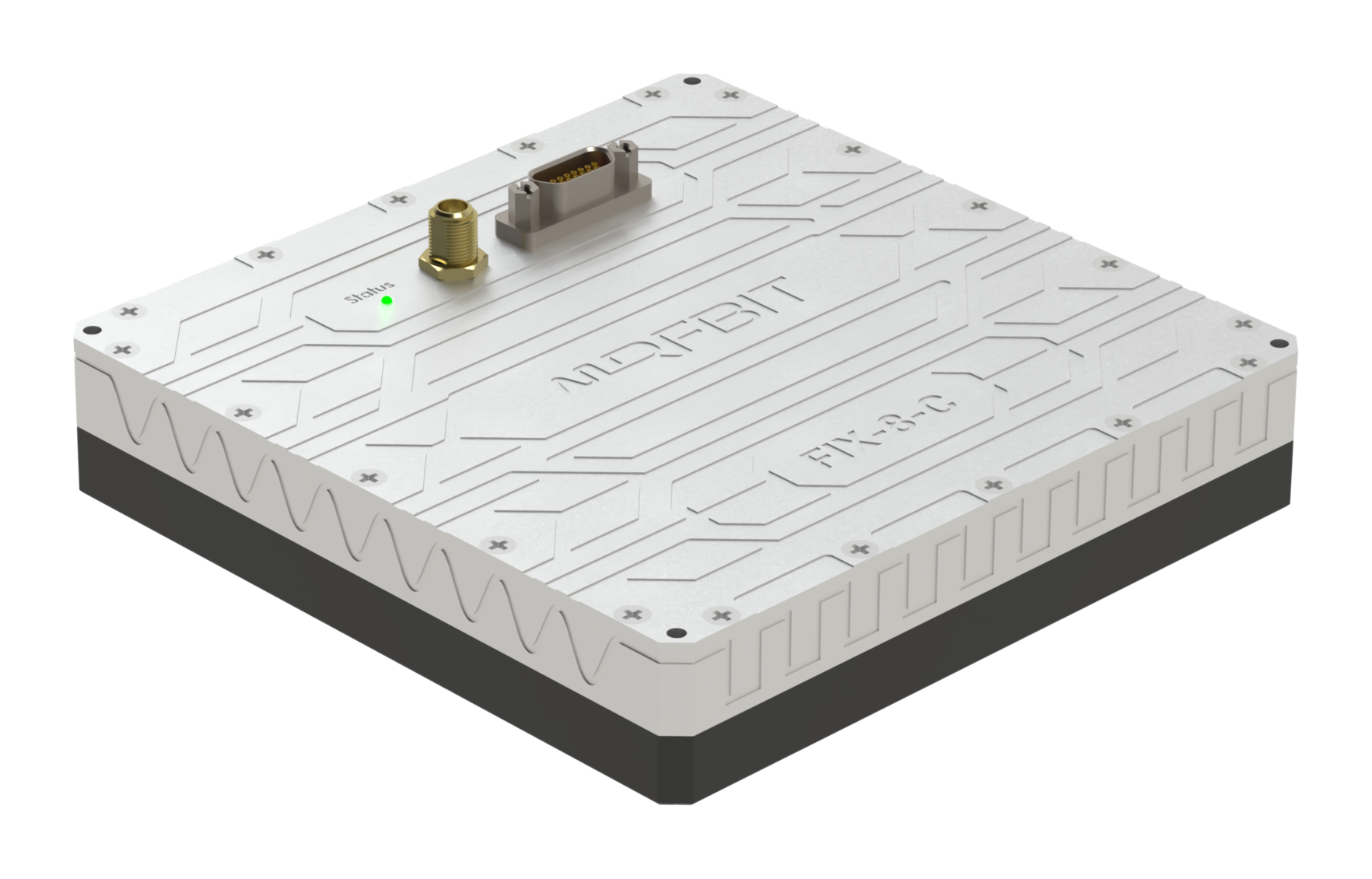
8-Channel Single-Band Anti-Jam Unit · L1 GNSS · Performance Size
The core of the range. Eight elements on L1 GNSS, seven simultaneous nulls, and the price point that puts anti-jam on the whole fleet rather than on the flagship. The performance size spaces the elements further apart, which gives it better jammer suppression.
8-Channel Dual-Band Anti-Jam Unit · L1 + L2 GNSS · Compact Size
Eight channels split across L1 and L2 GNSS. When L1 is denied, the receiver keeps an L2 solution with its own three nulls. The compact size keeps it small and light, for airframes where every millimetre and gram counts.
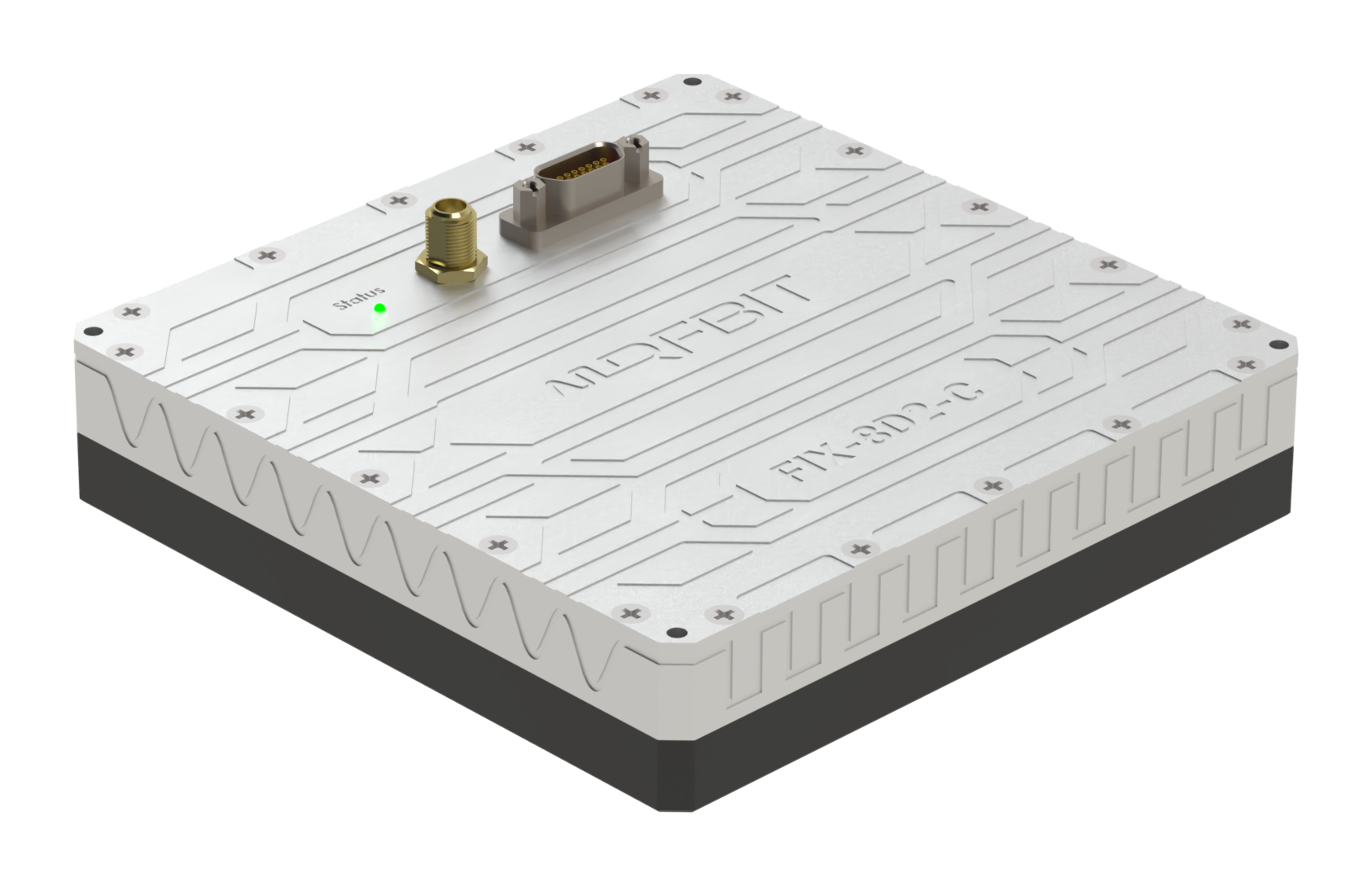
8-Channel Dual-Band Anti-Jam Unit · L1 + L2 GNSS · Performance Size
Eight channels split across L1 and L2 GNSS. When L1 is denied, the receiver keeps an L2 solution with its own three nulls. The performance size spaces the elements further apart, which gives it better jammer suppression.
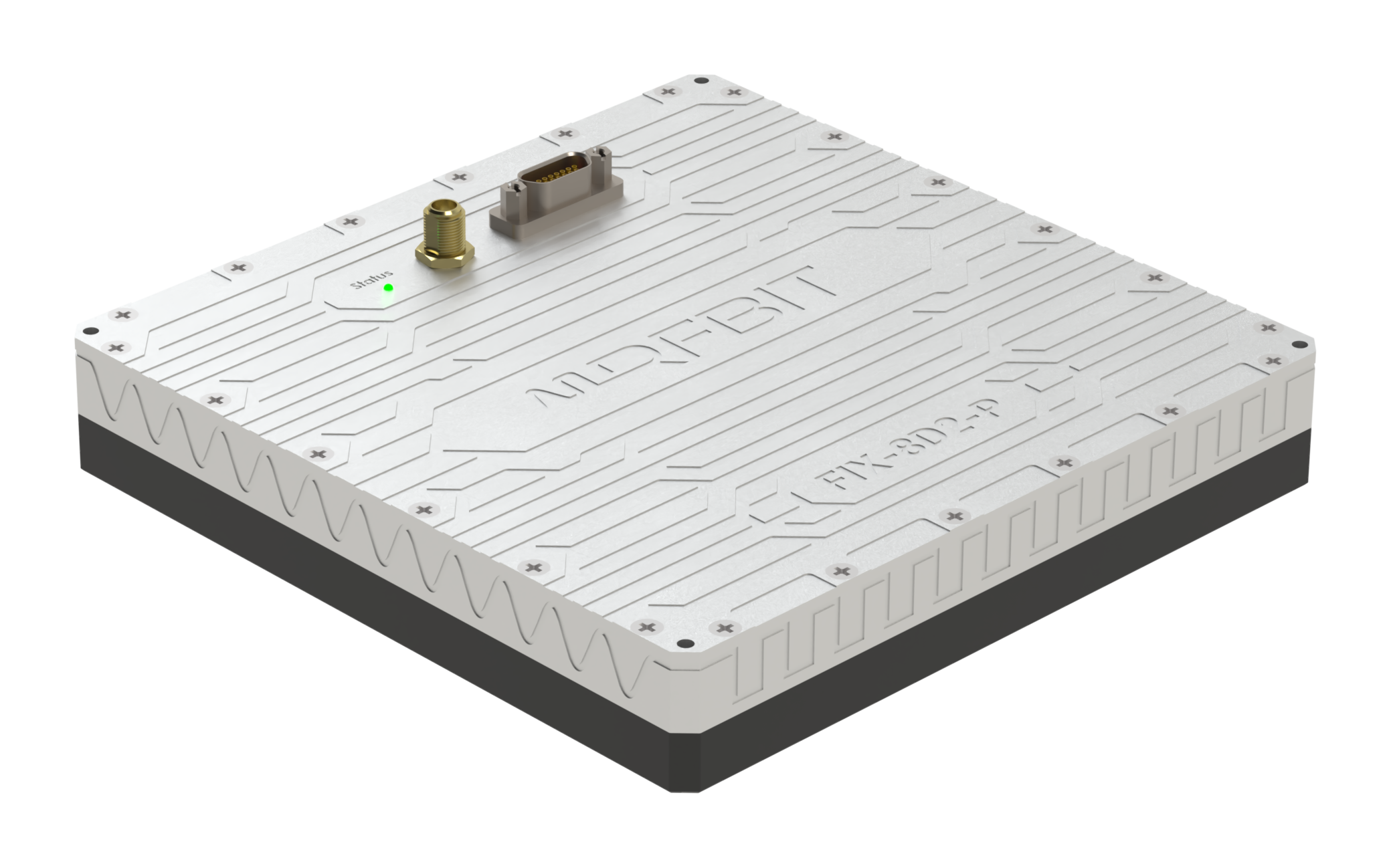
8-Channel Dual-Band Anti-Jam Unit · L1 + L5 GNSS · Compact Size
Eight channels split across L1 and L5 GNSS. The same dual-band survivability on the modernised L5 signal. The compact size keeps it small and light, for airframes where every millimetre and gram counts.
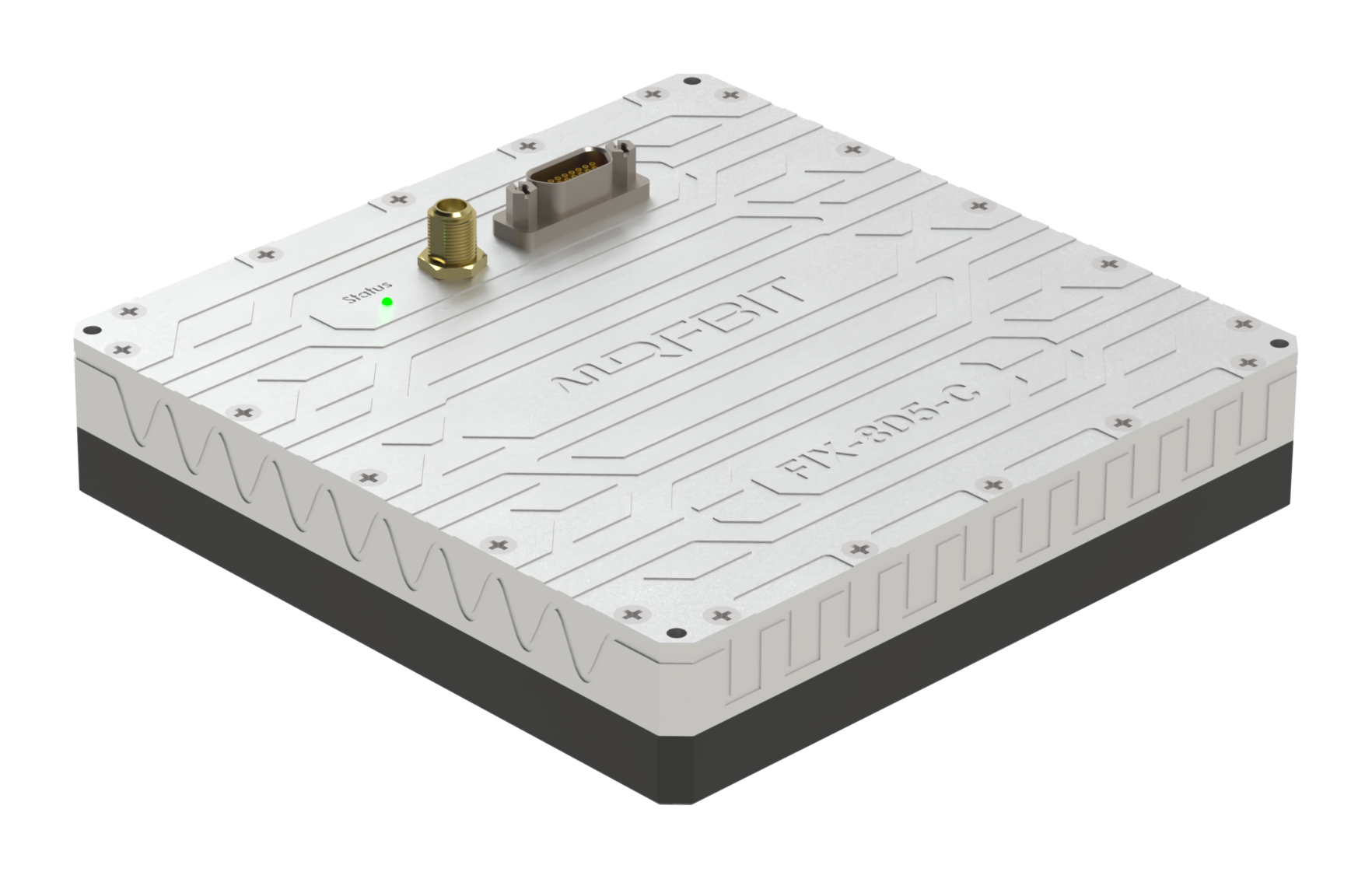
8-Channel Dual-Band Anti-Jam Unit · L1 + L5 GNSS · Performance Size
Eight channels split across L1 and L5 GNSS. The same dual-band survivability on the modernised L5 signal. The performance size spaces the elements further apart, which gives it better jammer suppression.
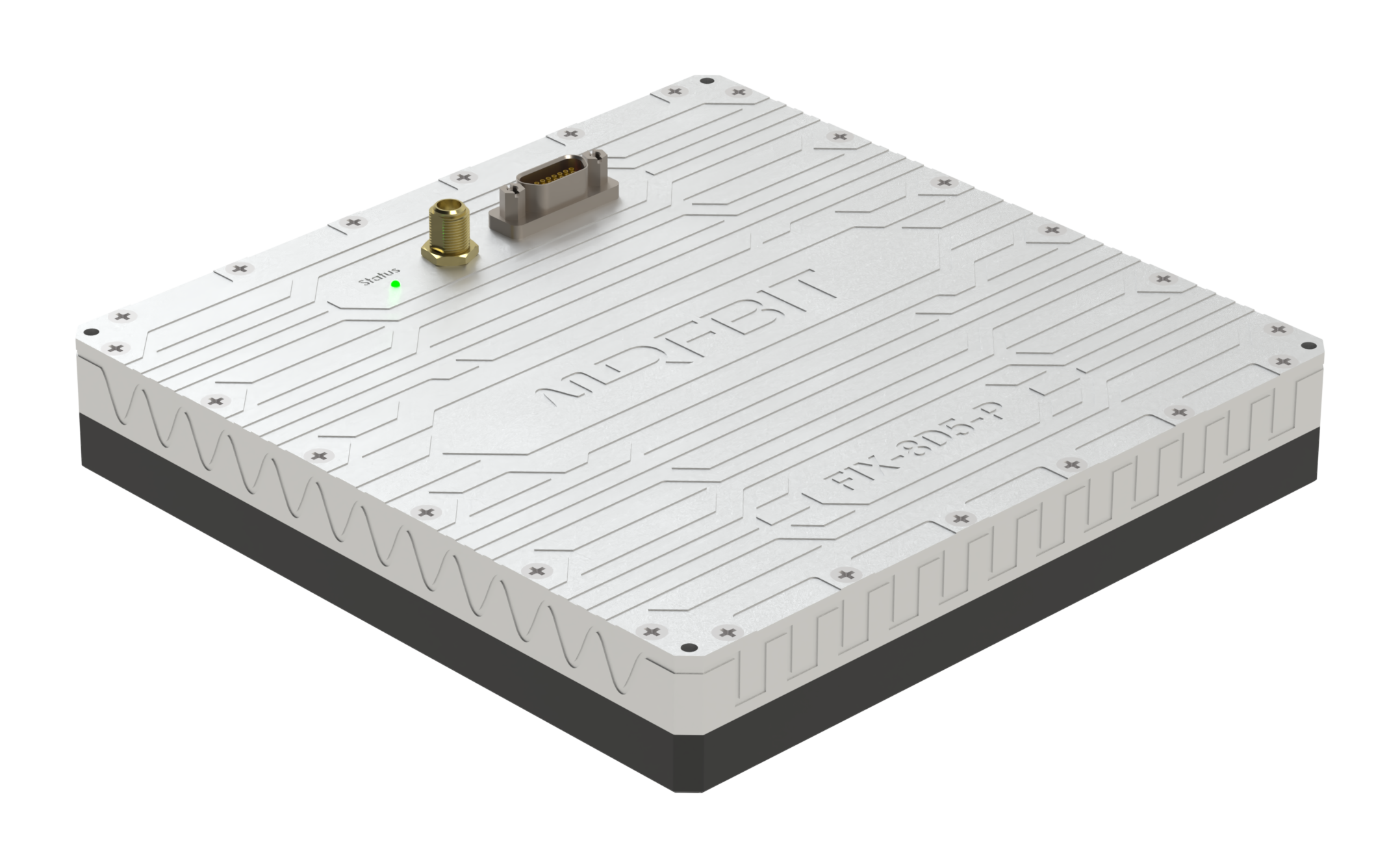
16-Channel Single-Band Anti-Jam Unit · L1 GNSS · Compact Size
Sixteen elements on L1 GNSS and fifteen nulls, for platforms that expect the densest interference — or that cannot afford to run out of nulls. The compact size keeps it small and light, for airframes where every millimetre and gram counts.
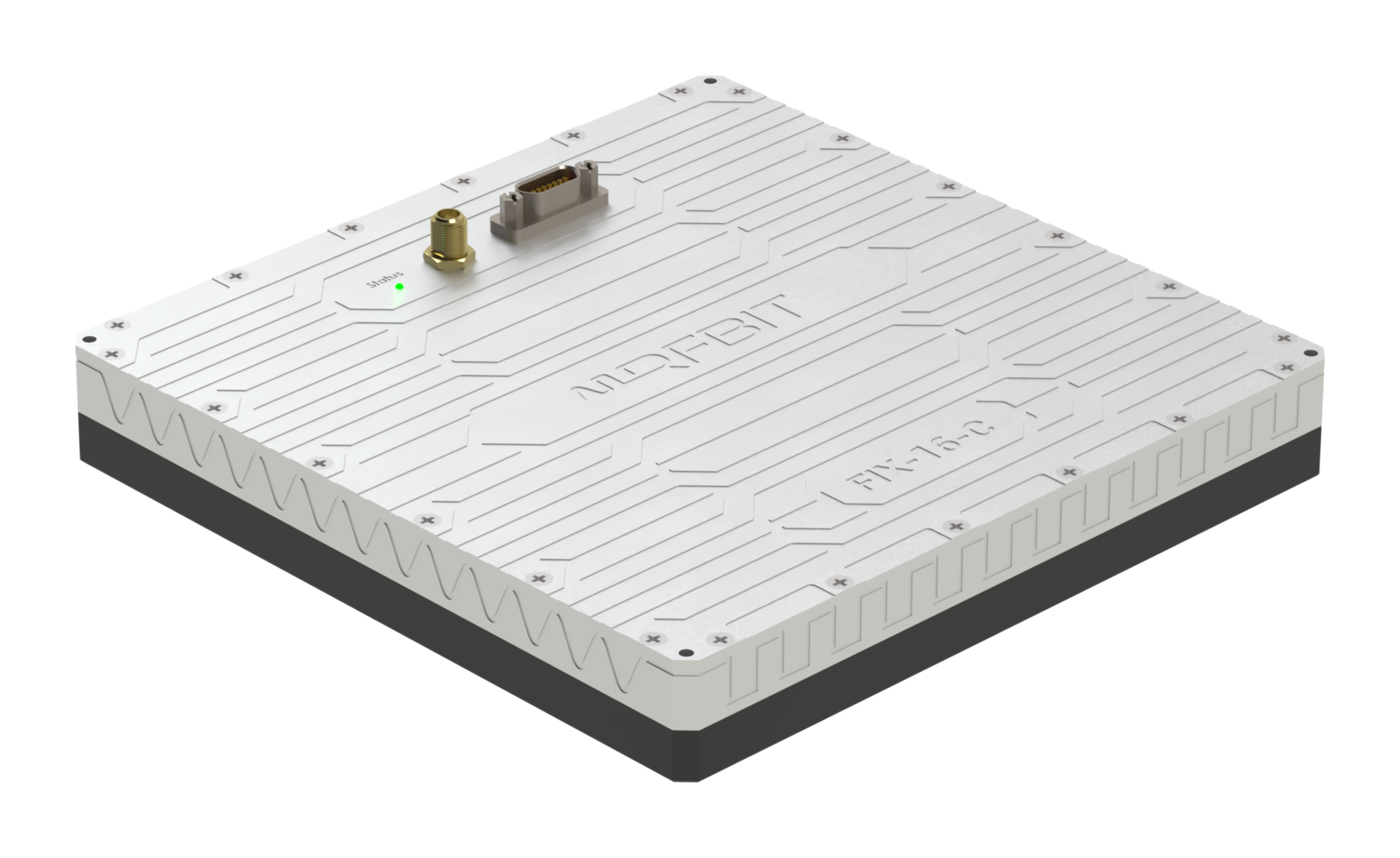
16-Channel Single-Band Anti-Jam Unit · L1 GNSS · Performance Size
Sixteen elements on L1 GNSS and fifteen nulls, for platforms that expect the densest interference — or that cannot afford to run out of nulls. The performance size spaces the elements further apart, which gives it better jammer suppression.
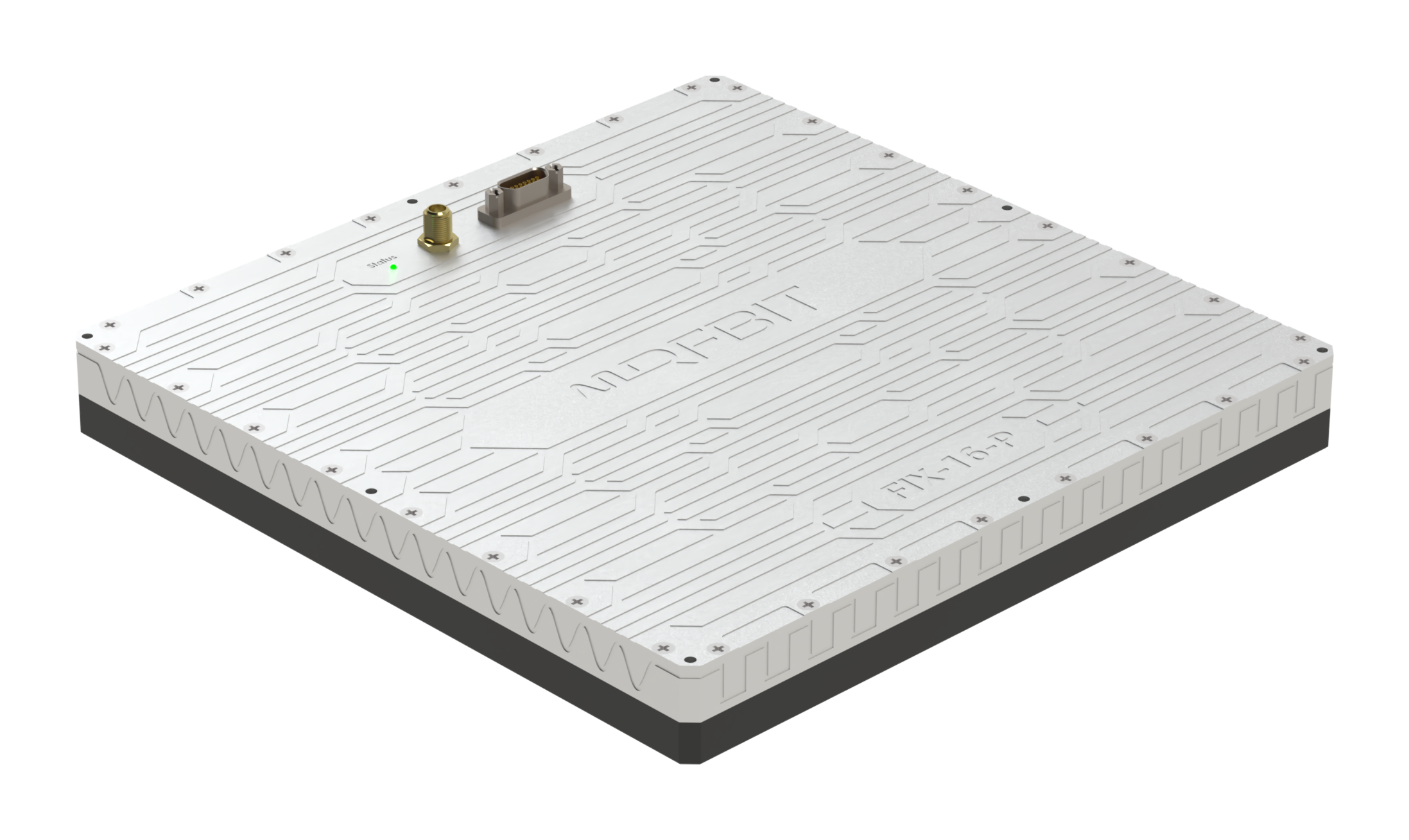
16-Channel Dual-Band Anti-Jam Unit · L1 + L2 GNSS · Compact Size
Sixteen channels across L1 and L2 GNSS: seven nulls on each band, independently. The compact size keeps it small and light, for airframes where every millimetre and gram counts.
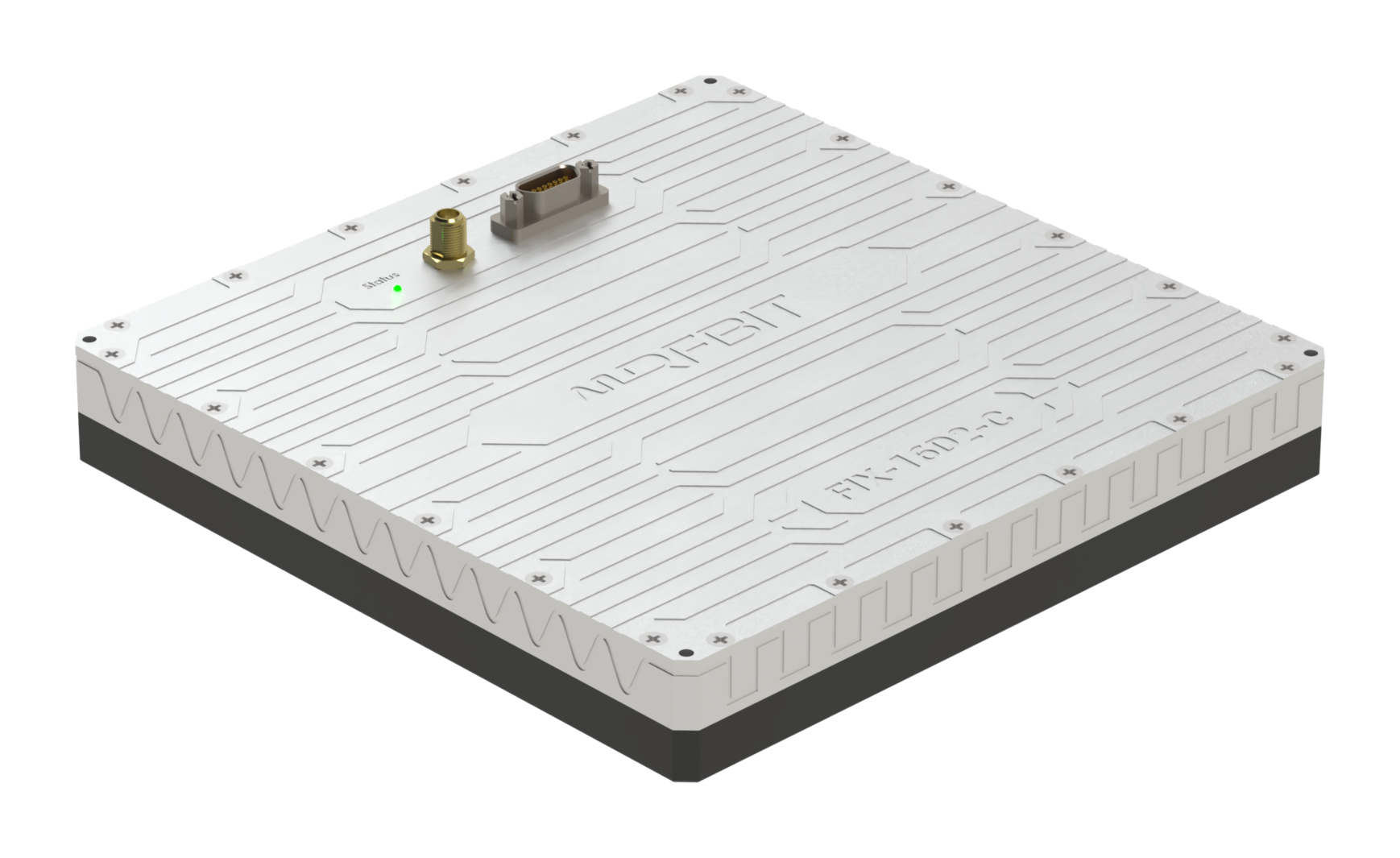
16-Channel Dual-Band Anti-Jam Unit · L1 + L2 GNSS · Performance Size
Sixteen channels across L1 and L2 GNSS: seven nulls on each band, independently. The performance size spaces the elements further apart, which gives it better jammer suppression.
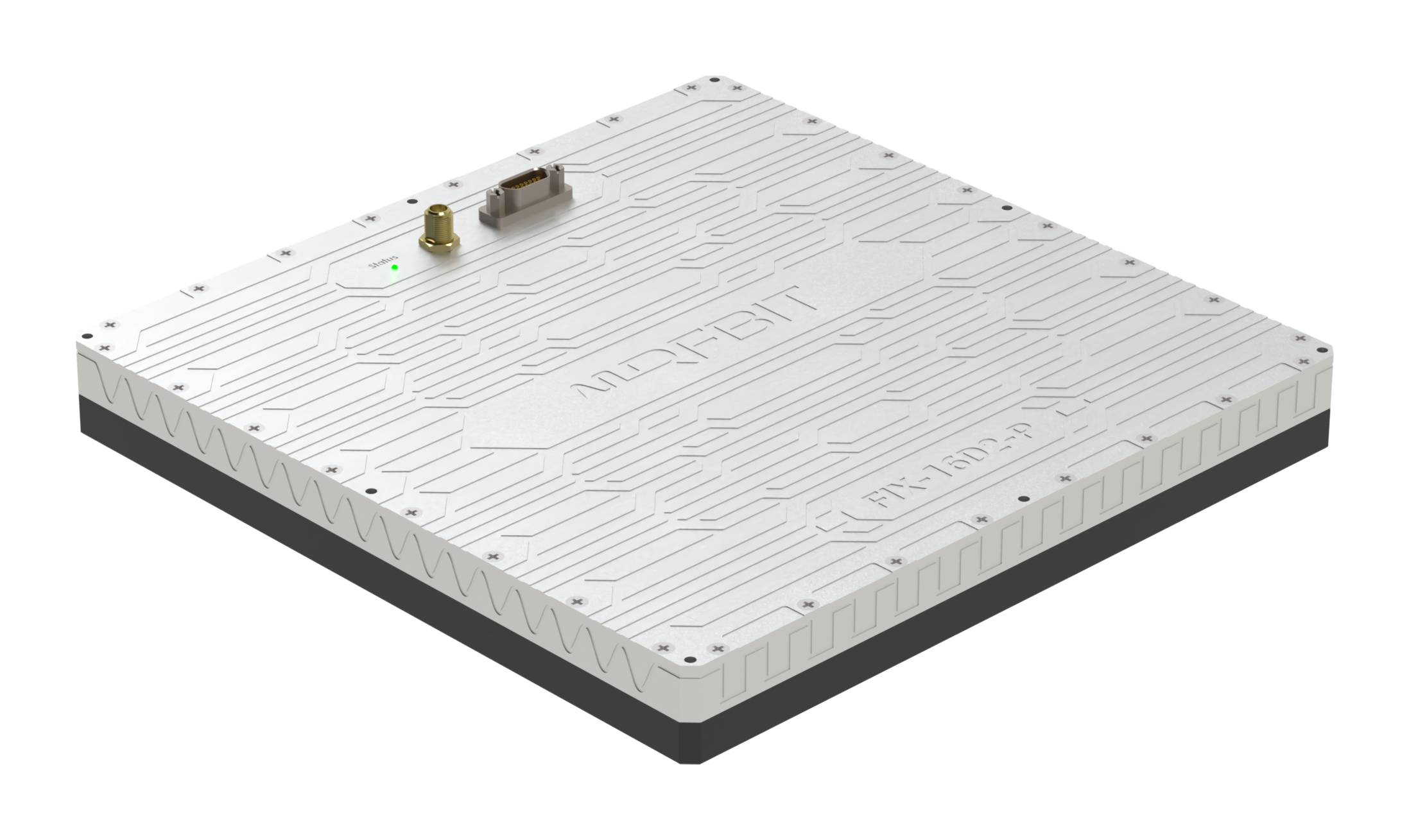
16-Channel Dual-Band Anti-Jam Unit · L1 + L5 GNSS · Compact Size
Sixteen channels across L1 and L5 GNSS: seven nulls on each band, independently. The compact size keeps it small and light, for airframes where every millimetre and gram counts.
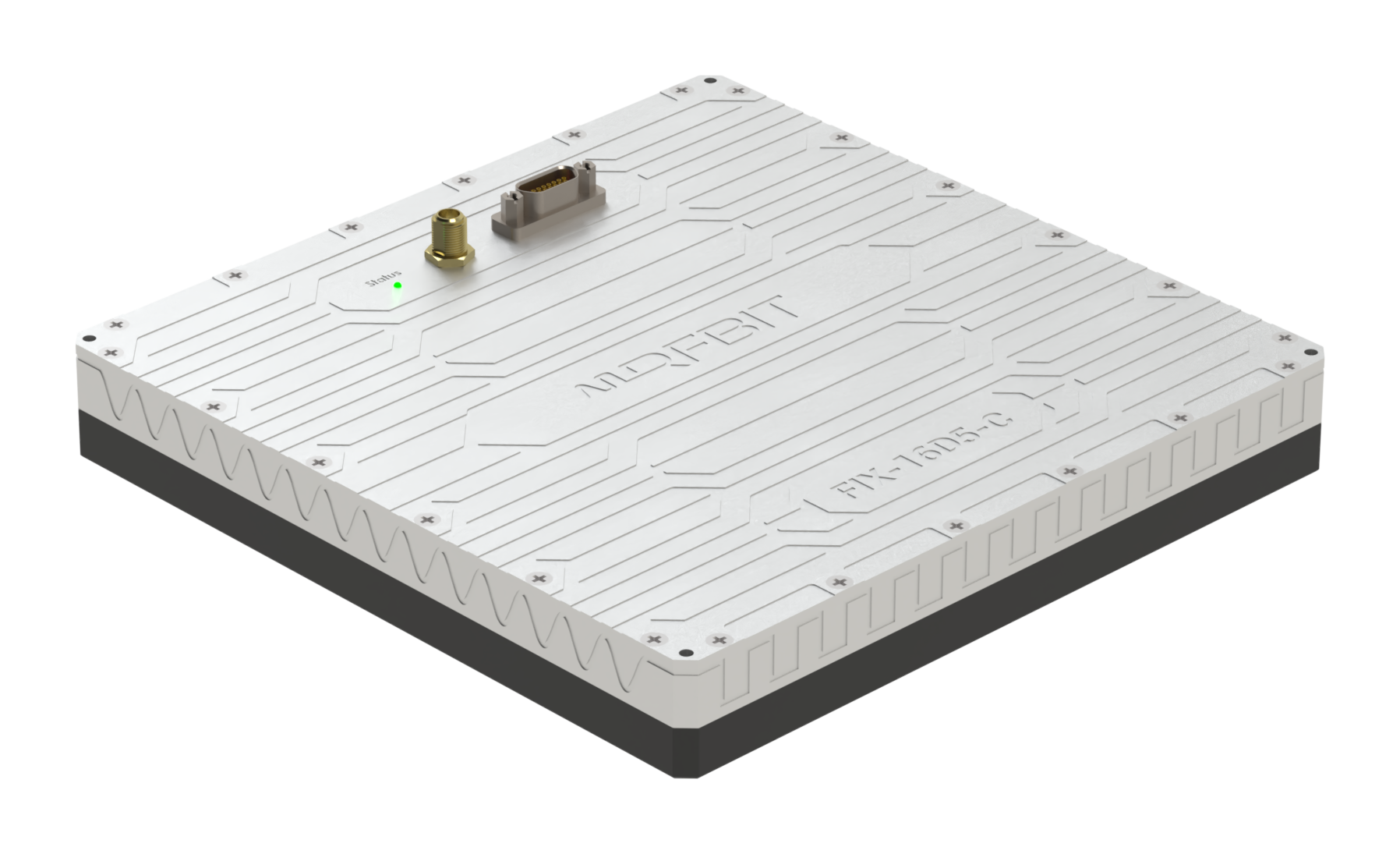
16-Channel Dual-Band Anti-Jam Unit · L1 + L5 GNSS · Performance Size
Sixteen channels across L1 and L5 GNSS: seven nulls on each band, independently. The performance size spaces the elements further apart, which gives it better jammer suppression.
| 1 | 2 | 3 | 4 | 5 | 6 | 7 | 8 |
|---|---|---|---|---|---|---|---|
| ETH TX+ | ETH TX− | ETH RX+ | ETH RX− | 422 TX+ | 422 TX− | 422 RX+ | 422 RX− |
| 9 | 10 | 11 | 12 | 13 | 14 | 15 |
|---|---|---|---|---|---|---|
| CAN H | CAN L | 232 TX | 232 RX | DGND | PWR IN− | PWR IN+ |
| Part Number | Description | |
|---|---|---|
| FIX-ACC-CBL-15D | 15-Pin Micro-D Interface Cable, 1 m (extra) | |
| FIX-ACC-RF-SMA | SMA Male to SMA Male RF Cable, 0.5 m (extra) | |
Both ship in the evaluation kit; afterwards they are ordered by part number.
| Part Number | Model | Build | Eval Kit | 10+ | 100+ | 1,000+ | |
|---|---|---|---|---|---|---|---|
| FIX-4-C | FIX 4 | Compact | $2,199 | $1,649 | $1,349 | $999 | |
| FIX-4-P | FIX 4 | Performance | $2,199 | $1,649 | $1,349 | $999 | |
| FIX-8-C | FIX 8 | Compact | $2,699 | quoted | quoted | quoted | |
| FIX-8-P | FIX 8 | Performance | $2,699 | quoted | quoted | quoted | |
| FIX-8D2-C | FIX 8D2 | Compact | $2,799 | quoted | quoted | quoted | |
| FIX-8D2-P | FIX 8D2 | Performance | $2,799 | quoted | quoted | quoted | |
| FIX-8D5-C | FIX 8D5 | Compact | $2,799 | quoted | quoted | quoted | |
| FIX-8D5-P | FIX 8D5 | Performance | $2,799 | quoted | quoted | quoted | |
| FIX-16-C | FIX 16 | Compact | $6,999 | quoted | quoted | quoted | |
| FIX-16-P | FIX 16 | Performance | $6,999 | quoted | quoted | quoted | |
| FIX-16D2-C | FIX 16D2 | Compact | $7,099 | quoted | quoted | quoted | |
| FIX-16D2-P | FIX 16D2 | Performance | $7,099 | quoted | quoted | quoted | |
| FIX-16D5-C | FIX 16D5 | Compact | $7,099 | quoted | quoted | quoted | |
| FIX-16D5-P | FIX 16D5 | Performance | $7,099 | quoted | quoted | quoted |
Evaluation kit: one ordered FIX unit with the RF and Micro-D Interface Cable.
Evaluation kits from $2,199. ITAR‑free, ships in 8–12 weeks.
Request a QuoteBoard-level 4-element L1 CRPA for expendable platforms. No housing, no sensors, UART / MAVLink.
From $499 at 1,000 units
Register interest ›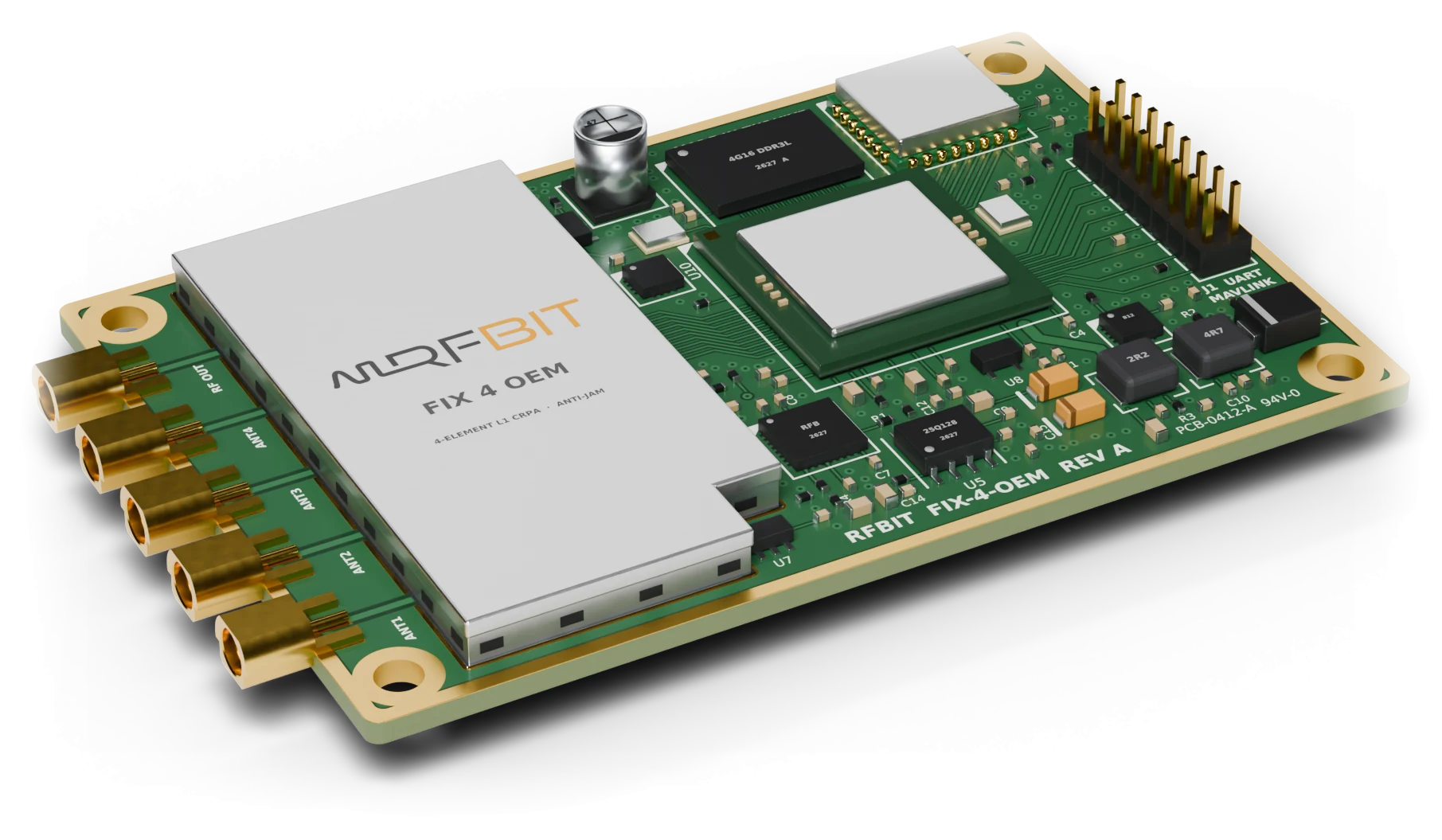
Compare Versions
| Parameter |  FIX‑4‑CCompact | 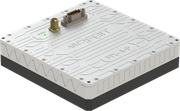 FIX‑4‑PPerformance | 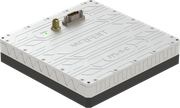 FIX‑8‑CCompact |  FIX‑8‑PPerformance | 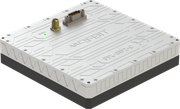 FIX‑8D2‑CCompact | 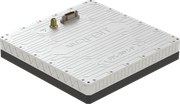 FIX‑8D2‑PPerformance | 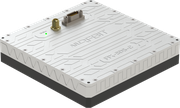 FIX‑8D5‑CCompact | 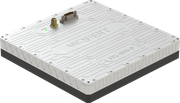 FIX‑8D5‑PPerformance | 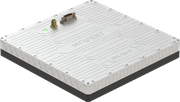 FIX‑16‑CCompact |  FIX‑16‑PPerformance | 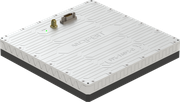 FIX‑16D2‑CCompact | 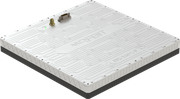 FIX‑16D2‑PPerformance | 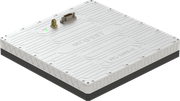 FIX‑16D5‑CCompact | 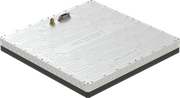 FIX‑16D5‑PPerformance |
|---|---|---|---|---|---|---|---|---|---|---|---|---|---|---|
| Channels | 4 | 4 | 8 | 8 | 8 | 8 | 8 | 8 | 16 | 16 | 16 | 16 | 16 | 16 |
| Elements | 4 on L1 | 4 on L1 | 8 on L1 | 8 on L1 | 4 on L1 4 on L2 | 4 on L1 4 on L2 | 4 on L1 4 on L5 | 4 on L1 4 on L5 | 16 on L1 | 16 on L1 | 8 on L1 8 on L2 | 8 on L1 8 on L2 | 8 on L1 8 on L5 | 8 on L1 8 on L5 |
| Nulls | 3 | 3 | 7 | 7 | 3 on L1 3 on L2 | 3 on L1 3 on L2 | 3 on L1 3 on L5 | 3 on L1 3 on L5 | 15 | 15 | 7 on L1 7 on L2 | 7 on L1 7 on L2 | 7 on L1 7 on L5 | 7 on L1 7 on L5 |
| Bands | L1 | L1 | L1 | L1 | L1 + L2 | L1 + L2 | L1 + L5 | L1 + L5 | L1 | L1 | L1 + L2 | L1 + L2 | L1 + L5 | L1 + L5 |
| Dimensions (mm) | 80 × 80 × 23 | 100 × 100 × 23 | 115 × 115 × 23 | 145 × 145 × 23 | 110 × 110 × 23 | 135 × 135 × 23 | 115 × 115 × 23 | 140 × 140 × 23 | 155 × 155 × 23 | 195 × 195 × 23 | 155 × 155 × 23 | 195 × 195 × 23 | 160 × 160 × 23 | 200 × 200 × 23 |
| Weight | 120 g | 150 g | 185 g | 265 g | 175 g | 235 g | 185 g | 250 g | 295 g | 420 g | 295 g | 420 g | 300 g | 435 g |
| Power Consumption | <6 W | <6 W | <12 W | <12 W | <12 W | <12 W | <12 W | <12 W | <25 W | <25 W | <25 W | <25 W | <25 W | <25 W |
| Evaluation Kit | $2,199 | $2,199 | $2,699 | $2,699 | $2,799 | $2,799 | $2,799 | $2,799 | $6,999 | $6,999 | $7,099 | $7,099 | $7,099 | $7,099 |
| 10+ Units | $1,649 | $1,649 | quoted | quoted | quoted | quoted | quoted | quoted | quoted | quoted | quoted | quoted | quoted | quoted |
| 100+ Units | $1,349 | $1,349 | quoted | quoted | quoted | quoted | quoted | quoted | quoted | quoted | quoted | quoted | quoted | quoted |
| 1,000+ Units | $999 | $999 | quoted | quoted | quoted | quoted | quoted | quoted | quoted | quoted | quoted | quoted | quoted | quoted |
Per-unit prices in USD. Compact and Performance share the same price. Everything not listed is identical across the range — 23 mm thick, the same M3 mounting scheme, the same SMA and Micro-D connectors. One integration, seven arrays.
Tell us about your platform and the jamming you expect. Our engineers will come back with a model, a build and a quote.